Ideas
Professional development should build capability people use.
Professional development isn’t a perk for a few or a course people sit through. It’s how people at every level grow the capability to do meaningful work, and how organizations grow with them.
What IntoWisdom means by professional development
Professional development is the ongoing work of building the knowledge, skills, judgment and confidence people need to contribute, grow and take on what comes next.
IntoWisdom believes everyone deserves professional development: not only leaders or people singled out as high potential, but people at every level of an organization.
Professional development is also different from training. Training delivers information. Development builds capability, and capability shows up in how people actually work.
Why this perspective matters
Treating development as capability-building, for everyone, changes how it’s designed and who it reaches.
Everyone deserves professional development
Growth matters at every level. When development is reserved for a few, organizations miss the capability of everyone else, and people notice who is invested in and who isn’t.
Learning has to connect to real work
People learn most when what they’re learning meets a challenge they actually face. Development that stays in the classroom rarely makes it back to the desk.
Capability is more than information
Knowing what good feedback looks like isn’t the same as giving it well under pressure. Capability grows through practice.
People learn through experience
Experience, reflection, practice and feedback do much of the work of learning. Good development makes room for all four.
Individual and organizational growth belong together
When people’s development connects to what the organization needs, both benefit. When it doesn’t, people outgrow their roles, or stop growing in them.
Where useful development happens
Development is most useful where three things meet.
- The person Their strengths, interests, aspirations and current capability.
- The work The real tasks, problems and situations they face.
- The organization What it needs, how it supports learning and the room it gives people to grow.
- Useful development Learning that helps the person, improves the work and serves the organization.
Programs often start from one circle: a course catalog, a skills gap or a career plan. Starting where the three meet makes development more likely to stick.
A different way to look at professional development
This view of development adds questions that keep learning connected to people and their work.
- Instead of only asking, “What training should we offer?” also ask, “What do people need to be able to do, and where will they practice it?”
- Instead of only asking, “Who should get development?” also ask, “How could development reach people at every level?”
- Instead of only asking, “Did people enjoy the workshop?” also ask, “What changed in how they work afterward?”
- Instead of only asking, “What course should I take?” also ask, “What challenge in my work could I learn from right now?”
- Instead of only asking, “How do we keep our best people?” also ask, “How do we help people keep growing here?”
Good professional development keeps asking what will be useful, to the person and to the work.
From learning to practical action
Learning becomes capability when it moves through experience and into practice.
- Experience Start from a real situation or challenge.
- Reflect Notice what happened and what it means.
- Learn Bring in ideas, frameworks and other perspectives.
- Practice Try new approaches, first in a safe setting, then in real work.
- Apply Use what you learned in your work, with feedback along the way.
Each round of application becomes new experience, so learning keeps going rather than ending with a course.
What this looks like in practice
Here is how this view of development shows up in IntoWisdom’s work. These are illustrations of the approach, not accounts of particular clients.
In professional development programs
Learning is designed around the work people do, with time to practice and apply it.
In workshops
Workshops are built around practice rather than presentation, so people leave with something they can use.
In onboarding
New people learn faster when onboarding connects them to real work and real colleagues, not only to policies and systems.
In leadership development
Leadership is one kind of professional capability, and many of the same principles apply.
Where this idea connects to IntoWisdom’s work
This view of professional development runs through these services and ideas.
Service
Professional Development
Practical learning for people at every level, and help designing learning programs.
Service
Workshops & Programs
Structured learning experiences built around practice.
Service
Leadership Development
Building the capability people need to lead others.
Idea
Leadership
Why IntoWisdom sees leadership as a relationship, not just a position.
From the IntoWisdom library
Articles, tools, events and resources connected to Professional Development.
Digital Resources · Digital download (PDF)
Master Your Email – Job Aid
A simple approach to taming your inbox and communicating effectively over email.
$5.00
Digital Resources · Digital download (PDF)
A Simple Book On Practical Creativity
The Simple Book format gives you access to everything you're interested in about developing the habits that build creativity. Choose your depth by clicking…
$5.00
Digital Resources · Digital download (PDF)
Designing Experiences and Facilitating Growth: A Workbook for Facilitators – Interactive PDF
Original price was: $75.00.$30.00Current price is: $30.00.
Digital Resources · Digital download (PDF)
Personal & Professional Growth Expedition Interactive PDF Workbook
A step-by-step interactive workbook to guide you to a powerful development plan.
Original price was: $75.00.$30.00Current price is: $30.00.
View details: Personal & Professional Growth Expedition Interactive PDF Workbook
Books & Publications · Printed
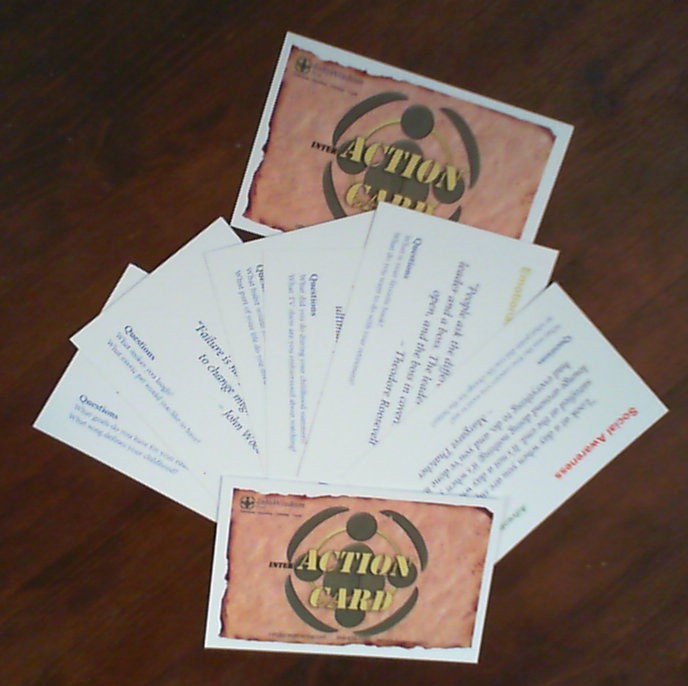
IntoWisdom InterAction Cards
The only set of activity cards you will ever need.
Original price was: $29.99.$20.00Current price is: $20.00.
Workshop · Available on request
Custom Leadership & Professional Development Cohorts
A 6-month, turnkey, customizable cohort-based development experience designed to build leadership capacity, strengthen workplace effectiveness, and create measurable behavior change over time.
Event details: Custom Leadership & Professional Development Cohorts