

In 2023, 65% of employees reported that their company’s motivation strategies felt like forcing puzzle pieces into the wrong board. The culprit? A 1940s pyramid we’ve blindly worshipped.”
The pyramid you learned about in Psych 101 might be missing its foundation. Maslow’s Hierarchy of Needs, that iconic stairway to self-actualization, has shaped how we think about human motivation for decades. But here’s the uncomfortable truth — its blueprint was drawn from studying history’s outliers, not everyday people. While managers still lean on this elegant model, modern workplaces are discovering that motivation doesn’t always climb neatly from base to peak. What if the tools we’ve trusted to build engaged teams are based on flawed architecture?
In my work as an organizational development consultant and curriculum designer, Maslow’s model comes up in conversation at least once a week. Most people, even if they’re not in psychology, learning, or leadership, know of, or have at least heard of, Maslow’s Hierarchy of Needs. It may be so popular because it resonates with so many people. It just seems right. It’s not an inadequate description of how people seem to be motivated. The model is often presented as a “prescription” of how things should be done rather than a “description” of a path to self-actualization. It has reached a point in popular thought that Maslow is taken as the “gospel” of motivational theory and is seldom questioned.
So, of course, I had to question it. How did Maslow come up with his Hierarchy of Needs? What research did he do? How many studies have been done to support his findings?
Maslow Hierarchy
The research at the foundation of Maslow’s Hierarchy of needs may amaze you. Would it blow your mind if you found out Maslow didn’t do any empirical research? In fact, since its introduction in 1943, researchers have found studying his theory problematic. (Motivations change based on context, culture, and inconsistent ranking). Maslow created his motivational hierarchy based on his study/observation of what he called “the master race” of people, such as Albert Einstein, Jane Addams, Eleanor Roosevelt, and Fredrick Douglas. Before positive psychology became a thing in 1998 (Martin Seligman chose it as a theme for APA), Maslow focused on the top 1% of the population rather than mentally ill or neurotic people. A recent meta-analysis from the Journal of Applied Psychology in 2023 showed only a 35% alignment with Maslow’s model in workplace settings. His model is elegant, widely accepted, wildly popular, and pretty much unsupported by research.
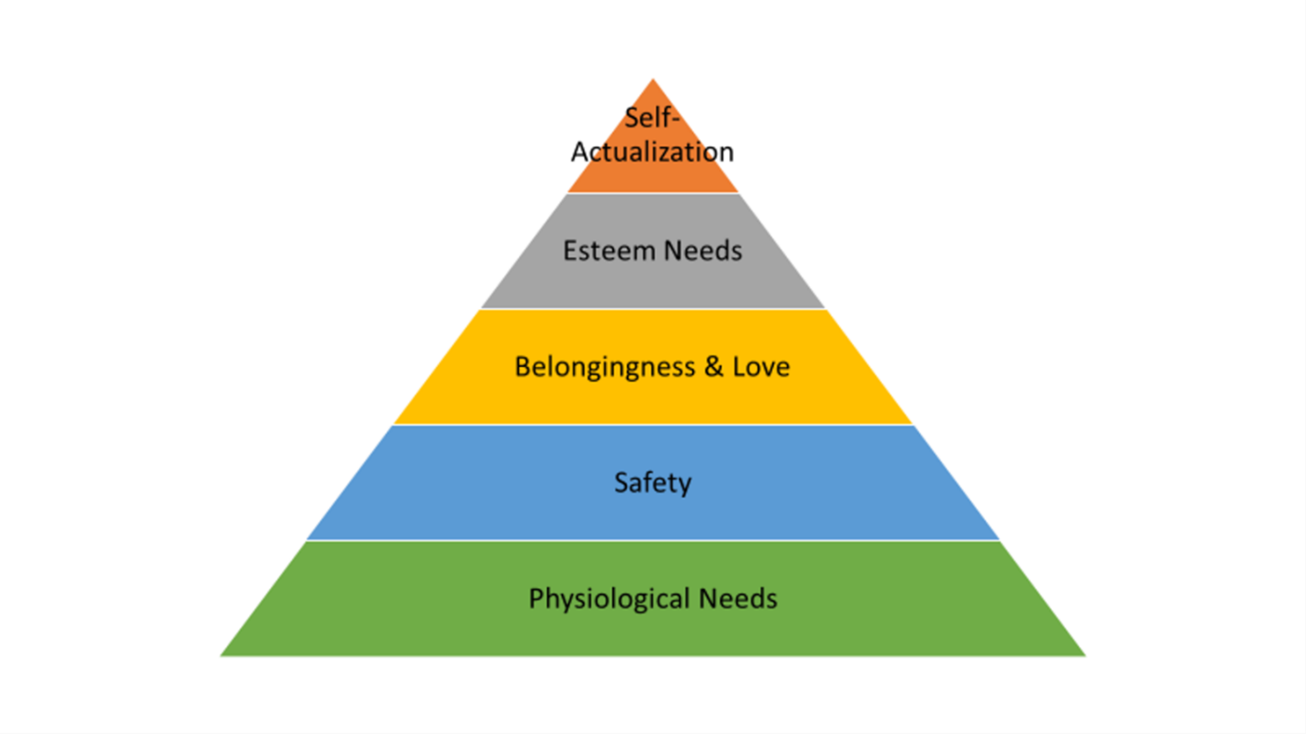
Is the Hierarchy of needs helpful? Yes. Are there other models that may offer additional insight with more evidence? Yes. I want to provide two models that may help you better address motivation when dealing with people.
Herzberg’s Two-Factor Theory
Have you heard of Frederick Herzberg? In 1959, he introduced “Herzberg’s motivation-hygiene theory (or the Two-Factor theory), stating that certain factors in the workplace cause job satisfaction and other factors that cause dissatisfaction. These factors act independently of each other. This perspective has been validated recently through research from the Gallup Organization and others. You may notice that Herzberg’s “factors” align with Maslow’s “needs.” The most significant difference between these two theories (besides the research base) is that Maslow’s needs are hierarchical and interdependent. (you can’t address higher needs while lower needs remain unmet), while Herzberg’s factors act independently of each other. They can all be met, none met, or some mix. The two-factor theory finds practical application in the workplace and other real contexts.
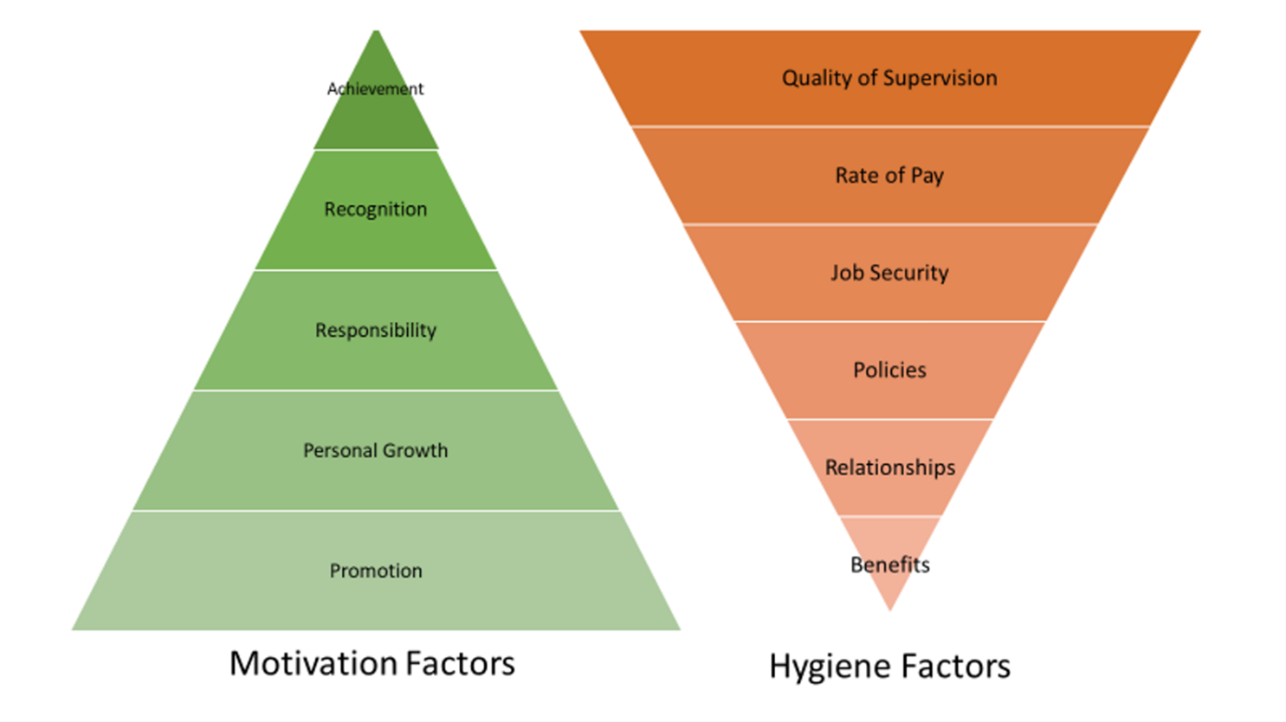
As you look at the different factors, you can predict people’s engagement:
- High Hygiene & High Motivation = High challenge (+) and engagement — These employees are thriving and highly productive. Continue to provide opportunities for growth and development.
- High Hygiene & Low Motivation = Low Motivation & not challenge — Boredom and “Walk Out.” — These employees may be comfortable but lack challenge. Consider providing opportunities for skill development, stretch assignments, or leadership roles.
- Low Hygiene & High Motivation = Interesting and challenging work & minimum support or reward — Burn Out. — These employees are passionate but at risk of burnout. Prioritize improving their work environment, providing additional resources, and promoting work-life balance.
- Low Hygiene & Low Motivation = No engagement, Challenge, or Interest. — These employees are disengaged and unproductive. Address the underlying issues, such as lack of clarity, poor communication, or inadequate training.”
Herzberg In The Real World
Southwest Airlines is a company that understood how hygiene and motivation work in tandem. They realized competitive salaries and benefits (hygiene) are crucial, but they went further. They built a culture of recognition, empowerment, and fun — motivators that made employees want to go the extra mile. By nailing both sides of Herzberg’s equation, Southwest fostered insane loyalty and, let’s be real, some seriously happy flight attendants. It’s a reminder that engagement isn’t just about paychecks; it’s about feeling valued and energized.
McClelland’s Three Needs Theory
Another model of motivation comes from a completely different school of thought. David McClelland developed his Three Needs Theory. His subsequent research published in Harvard Business Review in 1977 showed that people are motivated by a combination of three different needs: Achievement (accomplishment and forward movement), Affiliation (relationships and social interaction), and Power (prestige and influence). Everyone has each of these needs, but usually, one dominates our motivation.
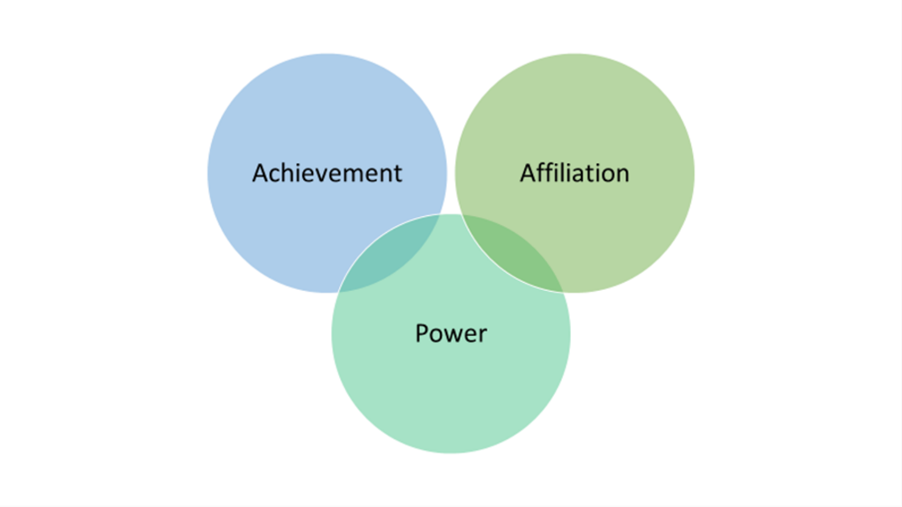
McClelland’s got us thinking about Achievement, Affiliation, and Power, and how those needs drive our people. But how does it actually work? It’s all about understanding what motivates individuals and then tweaking things to fit.
- Need Achievers — These folks live for a challenge. Throw them into projects where they can set goals, crush them, and see the results. Give them feedback loaded with data. This energizes them.
- Affiliation Seekers — These are your team players who thrive on harmony. Put them in roles where they can connect, collaborate, and keep the peace. Recognize their efforts with team praise.
- Power Players — They want influence, plain and simple. Give them leadership gigs, decision-making roles, and opportunities to mentor others. Publicly acknowledge their impact on the company.
Think about how you assign projects. If you’ve got someone with a burning need for Achievement, don’t stick them on a mind-numbing, repetitive task. Give them something with a measurable outcome that they can own. If someone lights up when they’re building relationships, put them in charge of client relations. It’s about finding the right fit.
McClelland In The Real World
Microsoft is a company that took McClelland to heart. They started looking at how those Three Needs played out in their teams. They found that folks high on Achievement thrived in roles demanding innovation and problem-solving. Affiliation-driven folks lit up in customer-facing positions, building those key relationships. And the Power players? Well, they naturally gravitated toward leadership spots. By tweaking roles to fit those dominant needs, Microsoft saw team performance and customer satisfaction shoot up. Seriously — McClelland isn’t just a theory; it’s a tool to build a killer team.
So What
I’m not saying forget about Maslow entirely. The Hierarchy can still be a quick-and-dirty way to start thinking about motivation. But Herzberg and McClelland? They offer deeper, research-backed insights. Learning a few different models could create more impactful results.
But it begs the question: Are we, as leaders, teachers, and HR pros, relying too heavily on outdated tools? Are we missing opportunities to truly connect with and motivate our people? And what happens as AI tools start to influence our models of thinking?
I’d love to hear your thoughts. What motivation models do you swear by? How have you seen these theories play out in your workplace? And what else should we be talking about when discussing motivation? Let’s change the conversation!
(All images by Adobe Stock, Pexels, and John Losey)
(AI was used in this article for research, grammar, and feedback. All content is the work of the author. The author has significantly edited any contributions from AI.)
This article first appeared on Medium.