

Change is in the news: ExxonMobil’s acquisition of Pioneer, Cedar Fair’s merger with Six Flags, Microsoft and Disney’s restructuring, and reductions in force (RIFs) at Amazon, Meta, and Chevron are big stories. Change happens in small ways daily: new office apps and programs, shifting reporting relationships, new filing systems, and even changing desks. Changes, big or small, have an impact. They impact the organization, but change also affects individuals in different ways.
Change is everywhere. One day, a company announces a merger; the next, a new technology shifts how teams work. Leaders roll out strategic initiatives, restructure departments, or implement new processes — only to face resistance, confusion, or disengagement.
It’s not that people hate change. They resist the uncertainty, the loss of the familiar, and the emotional turbulence that comes with it. Organizations may change instantly, but people transition at their own pace. This distinction is often overlooked, and yet it’s the key to managing change effectively.
As a business leader, HR professional, or entrepreneur, you don’t just implement change — you guide people through it. When you understand the difference between change (an external shift) and transition (an internal process), you can lead with clarity, reduce resistance, and make change stick.
This article explores why managing transition — not just change — determines success. We’ll break down proven frameworks, including the Bridges Transition Model and the ADKAR Model, to help you navigate the human side of change and drive lasting results.
Change vs. Transition: What’s the Difference?
It’s essential to differentiate between change, which is situational, and transition, which is psychological. Change is an external event or situation, such as a new business strategy, process changes, a merger, or a new product launch. It can happen quickly. Transition, on the other hand, is the internal psychological process that people go through as they internalize and come to terms with the new situation that change brings about. It’s an individual’s personal journey as they adapt to the new reality.
The Human Side of Change: Why Transition Matters
Organizations often focus on the technical aspects of change, such as new systems or processes, while neglecting the human side of the equation. However, change will only be successful if leaders and organizations address the transition that people experience during change. If these personal feelings of transition aren’t addressed, then resistance to change can cause a change project to derail or not produce the desired end result. Failing to support employees through this transition can lead to unhappy employees and unsuccessful projects.

Navigating the Individual Transition: The Bridges Transition Model
The Bridges Transition Model provides a framework for understanding and managing the personal side of change. Developed by William Bridges, this model emphasizes that transition is a process with three distinct stages:
1. Endings (Losing and Letting Go): This initial phase involves employees bidding farewell to old practices, which can be accompanied by emotions like anger, denial, confusion, and frustration. People identify what they are losing and learn how to manage these losses. They determine what is over and what is being left behind.
Action: Acknowledge these feelings and create space for employees to express their concerns.
2. Neutral Zone: The second phase, the “Neutral Zone,” is characterized by processing new information about the change, leading to excitement, anxiety, resistance, creativity, and innovation. This in-between stage can feel chaotic and be a source of confusion and uncertainty, but it can also provide an opportunity for new beginnings, innovation, and creativity.
Action: Provide clear communication, support, and training to help employees navigate this uncertain period.
3. New Beginnings: The final phase, “New Beginnings,” signifies the release of power and energy in the new direction, solidifying new ways of doing things with emotions such as relief, increased clarity, commitment, renewed energy, and exploration.
Action: Reinforce new behaviors and celebrate successes to solidify the change.
Guiding Individuals Through Change: The ADKAR Model©
While the Bridges Transition Model helps understand the emotional journey, the ADKAR Model,© from Prosci, provides a goal-oriented framework for communicating change and guiding individuals through the change process. ADKAR is an acronym that represents the five key outcomes an individual needs to achieve for a change to be successful:
• Awareness: Understanding the need for change. Make employees aware of the business case and reasons for change.
Action: Clearly communicate the business case for change and how it benefits individuals and the organization.
• Desire: Building the motivation to participate in the change. Instill a desire to join in with the new direction.
Action: Engage employees early, listen to concerns, and highlight personal and professional benefits.
• Knowledge: Learning how to change. Teach employees the competencies and insights to make the change.
Action: Provide training, mentorship, and practical tools that empower employees to adapt.
• Ability: Implementing the change in day-to-day activities. Help employees turn the new knowledge and competencies into the behaviors that will make them successful in the change.
Action: Offer hands-on guidance, coaching, and reinforcement.
• Reinforcement: Making sure the change sticks. As change occurs, continue to offer knowledge and ability based on lessons learned from successes and failures. Make the change permanent by reinforcing new methods.
Action: Recognize wins, share success stories, and embed new behaviors into company culture.
ADKAR makes organizational change more successful by helping individuals succeed in the new systems. Organizations change one person at a time.
Integrating Change Models for Comprehensive Change Management
An integrated approach is essential to effectively managing organizational change and individual transition. This involves using models like Bridges and ADKAR in tandem, complemented by other frameworks such as the Kübler-Ross Change Curve.
• Bridges Transitions Model is a descriptive model that helps leaders understand employees’ emotional stages during transition, enabling them to provide appropriate support and communication.
• ADKAR is a prescriptive model that provides a structured planning and communication approach for guiding individuals through the change process, ensuring they have the awareness, desire, knowledge, ability, and reinforcement needed to embrace the new reality.
- Covey Change Curve describes an organization’s productivity over time. It can help anticipate changes in performance, lag-time, and emotional responses such as denial, frustration, anger, and depression, allowing for proactive support strategies.
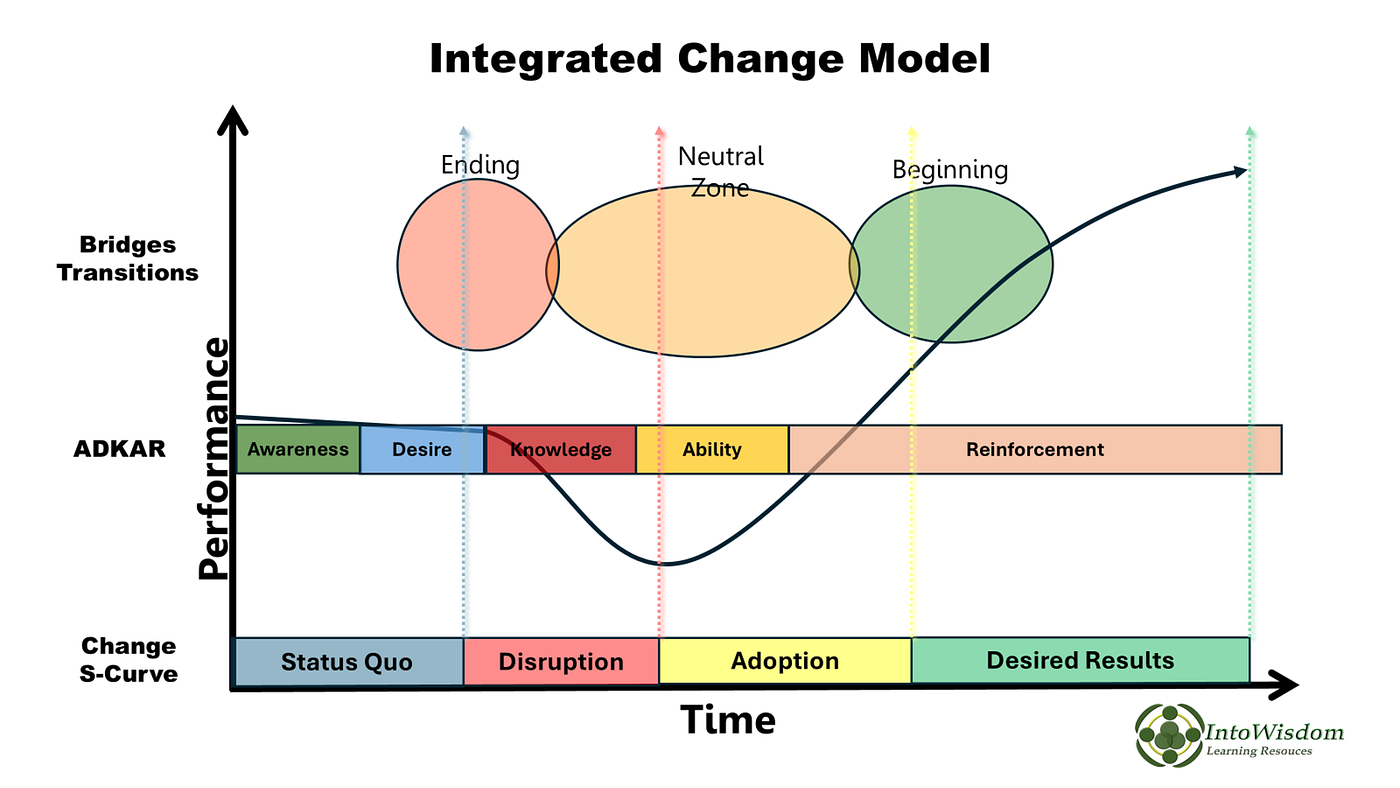
By integrating these models, organizations can create change management strategies that address the technical and human aspects of change, fostering a smoother and more successful transition for everyone involved.
Key Takeaways
• Recognize the difference between organizational change and individual transition.
• Prioritize the human side of change by addressing the emotional needs of employees.
• Utilize the Bridges Transition Model to understand the stages of transition and provide targeted support.
• Implement the ADKAR Model to guide individuals through the change process and ensure successful adoption.
• Integrate change management models for a comprehensive approach that addresses both organizational and individual needs.
• By understanding that organizations change while people transition, leaders can create more effective change management strategies that foster adaptability, resilience, and, ultimately, greater success.
Final Thoughts: Managing Change by Leading Transition
Change is inevitable, but successful change isn’t guaranteed. Too often, organizations focus on systems, processes, and strategy — forgetting that real transformation happens one person at a time. When leaders recognize that change is an event, but transition is a journey, they can guide people through uncertainty, reduce resistance, and build a culture that embraces growth.
The key is balance: use structured frameworks like ADKAR to drive change at an organizational level while applying Bridges’ Transition Model to support individuals through the emotional and psychological shift. A well-managed transition doesn’t just prevent disruption; it turns change into an opportunity for innovation, engagement, and long-term success.
What’s Next?
Take a moment to reflect:
- What change (major or minor) is your organization facing right now?
- How are you addressing the structural change and human aspects of the transition?
- What one action can you take this week to help your team move through change more effectively?
Leading change isn’t about forcing compliance. It’s about fostering commitment. Start by understanding the transition process, supporting your people, and making change something they can engage with, not just endure.
Your success as a leader isn’t just about managing change but also guiding transition. How will you help your people move forward today?

(All images by Adobe Stock, Pexels, and John Losey)
(AI was used in this article for research, grammar, and feedback. All content is the work of the author. The author has significantly edited any contributions from AI.)
This article first appeared on Medium.