

Every transition starts with an ending. — Bridges
It’s the day after Christmas. At the break of day, I grab my journal and lean back in my old, brown recliner. I don’t start writing, I start reading. I look back on the year to remind myself of the journey. I see the hopefulness of the development planning I did last January. The frustrating process of working on a complicated vendor contract in February and March. The summer’s coaching-travel struggle. Going through the journal helps me bring the entire year into context. After I’ve reflected, I open up a fresh page and write down what I noticed.
The next day, I look at my reflection notes and compare it to my development plan for the year and assess how I did. Since I am a development geek, I actually grade myself on my growth. The next part of my year-end transition is to identify what worked and what didn’t, and to capture lessons I can apply as I start working on my development plan for the coming year. It’s not about creating New Year’s resolutions. It’s about creating a plan for growth. That’s the next step: creating a written plan that identifies where I want to end up at the end of the coming year. This is the process I use to start my transition into a new year.
December is the end of the year. It’s the start of a transition.
Each year, I use the end of December as a transition from the old year into the new. Sometimes I get into planning paralysis. My development planning gets out of hand, and I spin my wheels in the planning process and delay implementation. I need to remember that January is about starting. It provides an opportunity to take a fresh step.
Every transition ends with a new beginning. — Bridges
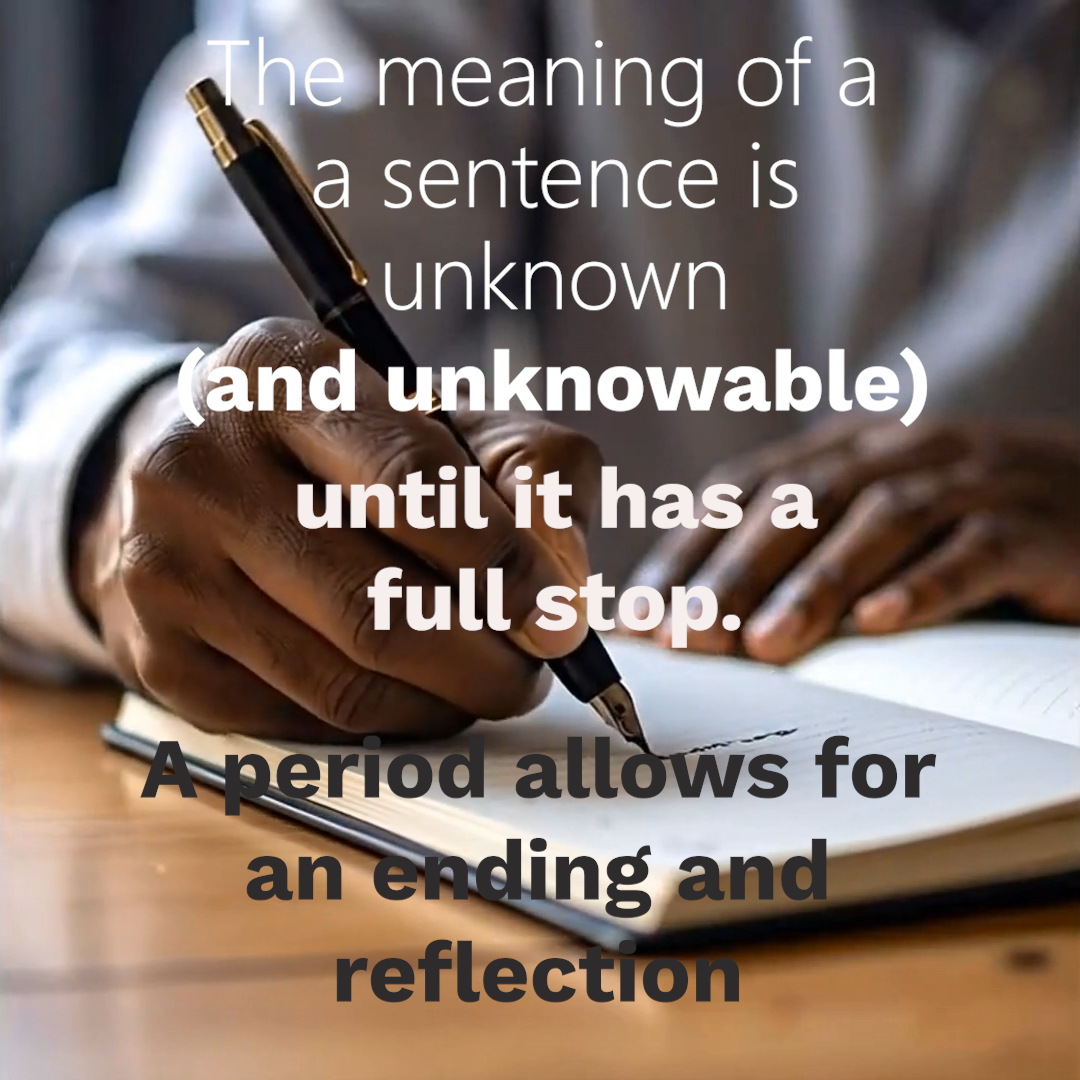
There is nothing magical about New Year’s Day, but there is something powerful about a new year. Just like we cannot know the meaning of a sentence until we create a full stop, the new year encourages us to put a period in the story of our lives to discover lessons and meaning. The new date on a new calendar creates a natural endpoint, an external prompt to pause and consider our experience and find meaning in our journey. The new year is like a new day.
Looking at my personal development can be overwhelming when I look at my whole life. Anyone’s life journey can be complicated. My path has been “twistier” than most. Looking too far into the future can be overwhelming as well. While I’m aware of the entirety of my life, looking at the new year as a new day offers important guardrails that help me keep a useful perspective. Managing the overwhelm helps me step into the new year by starting to live the plan I’ve crafted.
One Day at a Time
If you know about the Twelve-Step recovery program from AA, you know the phrase “One day at a time.” It keeps the big picture of sobriety in mind while helping people focus on the present moment. Don’t focus on the failures (or successes) of yesterday. Don’t worry about what tomorrow brings. Focus on doing what you need to do today. If you know where you want to end up, taking the right next step is what will get you there.
One day at a time can feel like I need to push through today; I need to grind it out. The truth is, it often feels that way. There are times when I wake up and feel tempted to focus on yesterday’s mistakes and missteps. I start to worry about upcoming deadlines or the bills that are coming due. I know I’m going to have to force myself into being present. One day at a time reinforces this grind mentality to help me push through
New Every Morning
Another way to think about “One day at a time” is “New every morning.” It may have to do with my personal history, but “New every morning” offers a powerfully positive perspective.
“New every morning” is a hopeful promise. It makes me think of the day as a clean slate to write a new story. I see potential in the new day. Rather than pushing through the grind, I leap into the possibility. It may seem subtle, but it makes a huge difference in my energy and attitude.
The new year offers a new morning. In December, I’ve mourned and celebrated my life and work of the previous year. This is crucial for me to notice how I’ve grown and what lessons are available to me to continue my growth. It can also tempt me to bring the burdens of my successes and failures to the new year. This can only hold me back. I start my transition to the new year by ending it intentionally.

In William Bridges' work on Transitions, he uses the phrase “Every transition starts with an ending” to encourage creating a specific closing opportunity for an experience of a season of life, putting a period on the experience. He also uses the phrase “every transition ends with a new beginning.” This echoes with the sentiment of “new every morning.” Take the memories and lessons from your previous experience but leave the baggage behind. The new year is a clean slate to build on. Live into it intentionally.
One Day at a Time & New Every morning
Both phrases have their place and work when applied at the appropriate moment.
While there will be times that you will need to focus on “one day at a time,” remember, each day is new and filled with possibilities. Both phrases are helpful. One helps you push through difficult times. One reminds you of the potential for you in each day.
Living One Day at a Time:
· Use a journal or a notepad — Start the day with a deep breath and use some of the following ideas as a prompt to write.
· Start with gratitude — As my wife says, “focus on the donut. Not the donut hole.” Focus on the positive things you have and not what you lack.
· Make a plan — Make a list of things that need to get done today and things you would like to get done. Break your day into 30 to 60-minute chunks and put these things into your calendar.
· Use the transition between your activities as a transition. Stand up between each task. Take at least one longer walk each day.
· End your day with your journal. Keep it simple. Take a look at your morning journal and write about one win for the day. (even if it isn’t part of your morning list)
· Disconnect — Turn off your devices, take a deep breath, and allow yourself to rest.
Living New Every Morning:
· Create Strong Endings — Celebrate, reflect, review, and capture your previous year.
· Have a plan — No matter how simple or complex, take time to create specific intentions for yourself in the coming year.
· Don’t over-plan — Your plan will never be perfect. It will feel incomplete. Don’t let those feelings stop you from starting.
· It’s not a resolution; it’s a new day! — Don’t “resolve” to do things. Do them.
· Do it — It doesn’t have to be on New Year’s Day or even in January. When you decide to make a change, end on purpose, make a plan, live the plan. That’s how change and transition work.

Living Into The New Year
As the new year starts, it’s easy to let our calendars fill up and jump into the business of our lives. Don’t let your schedule crowd out your ability to live one day at a time and think of each day as being new every morning. Each day, take a breath and recognize when you need motivation to lean and grind “one day at a time.” Be aware of when you need the hopefulness of a clean slate and claim each morning as new.
December offers opportunities to end on purpose and think about how you can make the next year better. The new year offers a new day to start living the plan. It’s a clean slate to write the next part of your story. You may be carrying a heavy load into the new year. Remember to take it one day at a time. Both of these phrases are powerful tools to help the coming year be the best yet.
Grab a journal, notebook, or some loose paper and write down the suggestions above. At the very least, take a piece of scrap paper and jot down “One Day at a Time” and New Every Morning.” Tape it to your desk or put it in a place where you will see it every morning. Each day is a new opportunity to write your story. Claim it.
(All images by Adobe Stock, and John Losey)
(AI was used in this article for research, grammar, and feedback. All content is the work of the author. The author has significantly edited any contributions from AI.)
This article first appeared on Medium.