
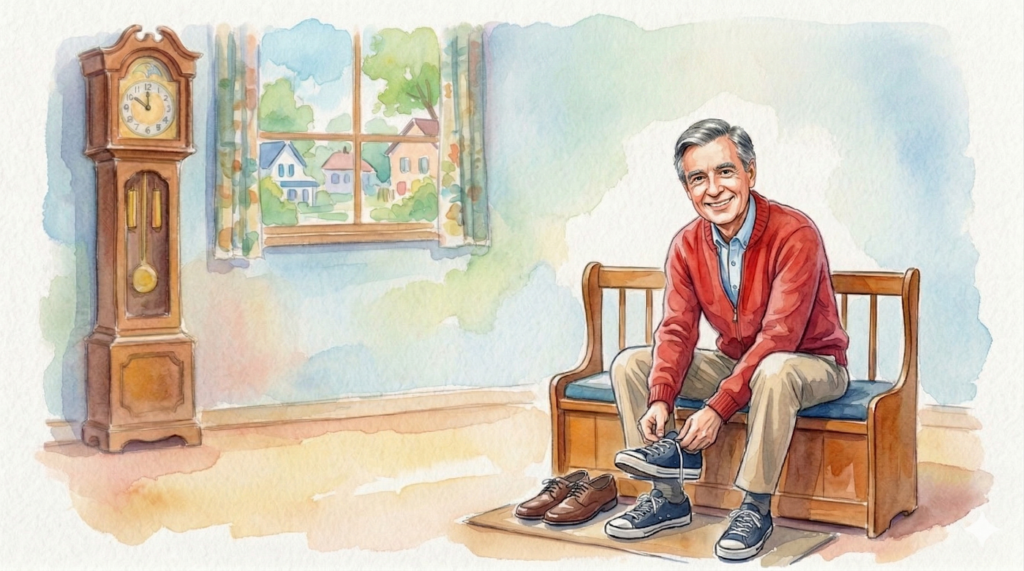
“As human beings, our job in life is to help people realize how rare and valuable each one of us really is.”
Fred Rogers
What the world’s greatest neighbor knew about making life easier for everyone around him
The one person I wish were still alive today is Mr. Rogers.
I know that might sound strange. There are scientists who might have cured diseases, leaders who might have prevented wars, artists who might have made the world more beautiful. I’ve thought about this. My answer is still Fred Rogers.
Not because the world has gotten harder — it has always been hard. But because what we are missing most right now is someone who knows how to make hard things easier. Not someone with all the answers. Someone who knows how to be in the room with people who are struggling, frightened, or angry — and make them feel that it’s going to be okay to talk about it.
That was Fred Rogers. Every single day. For everyone he ever met.
I know this from personal experience. I grew up watching Mr. Rogers, and what I remember most isn’t any particular episode or lesson. It’s the feeling. Sitting in front of the television, I felt like I was with a friend. His stories seemed like an extension of my own imagination — not something being delivered to me from the outside, but something being drawn out of me from within. I didn’t have words for it then. Looking back, I understand what he was doing. He was making space. He was making it easy to feel whatever I was feeling, imagine whatever I needed to imagine, and be exactly who I was. I had no idea how rare that was.
There is a word for what he was doing, though he never used it. The word is facilitation. It comes from the Latin — facere facilis — to make easy. Not to make hard things disappear. To make them easier to name, easier to approach, easier to move through together. That was Rogers’ life’s work. And it is available to every one of us.
He made feelings easy to name
Fred Rogers grew up as a lonely, overweight child who was bullied and turned inward. He knew what it felt like to have big emotions and no safe place to put them. That experience never left him. That lonely kid stayed with him, driving everything he did.
His mentor, the child development expert Margaret McFarland, gave him a phrase he returned to for the rest of his life:
“Anything mentionable is manageable.”
Margaret McFarland, Rogers’ mentor
He built thirty-three years of television around that single idea. Divorce. Death. War. Anger. Disability. Fear. He addressed all of it — gently, honestly, without flinching — at a time when most adults were convinced children couldn’t handle it.
What he understood, and what most of us forget in our rush to make things feel okay, is that people don’t need their feelings resolved. They need them witnessed. They need someone to stay in the room with the hard thing rather than back away from it. Rogers never backed away. Not once.

Think about what it would mean to be that person in your own life. The one who doesn’t change the subject when things get uncomfortable. The one who can sit with someone’s fear or anger or grief without needing to make it stop. That capacity — staying present with what is difficult — is one of the most valuable things one human being can offer another. Rogers practiced it like a discipline, because it was one.
He made hard conversations easy to enter
Watch an episode of Mister Rogers’ Neighborhood carefully and you will notice something most people miss. He didn’t leave a single thing to chance. Every episode has a deliberate shape — an arrival, a journey to the Neighborhood of Make-Believe, a return, a quiet close. The structure is always the same because the structure is the point. It tells the child: you are in a safe place. You know what comes next. You can relax enough to feel what you’re feeling.
Rogers understood that you cannot drop someone into a difficult conversation and expect them to find their footing. You have to build the approach. You have to create conditions, making sure the floor is steady and the room is quiet before you open the difficult door.
You see this everywhere. The leader who wonders why their team won’t speak honestly in meetings has usually skipped this step. The parent who can’t figure out why their teenager won’t talk to them has often done the same. Hard conversations don’t happen because we announce it’s time for one. They happen because someone took the time to make the room feel safe enough first.
Frankly, there isn’t anyone you couldn’t learn to love once you’ve heard their story.
Fred Rogers
Rogers had a way of breaking trail. He built the path before he asked anyone to walk it. And the path always started with genuine interest in the person across from him — their story, their experience, their inner life. That interest wasn’t a technique. It was a conviction.
He made people easy to see
Rogers responded personally to every piece of fan mail he received. Not form letters. Personal responses to children and adults who had written to him, often in moments of real distress. He believed every person who reached out deserved to feel heard. So he heard them. All of them. For decades.
On the show, he had a gift for listening beneath the surface question to the real one underneath. A child asking about a dead goldfish was often asking about death itself — about loss, about what happens to the people we love. Rogers never answered just the question that was asked. He answered the one that mattered.
There’s no person in the whole world like you, and I like you just the way you are.
Fred Rogers
Every adult who grew up watching Rogers heard those words. Most of us can still hear them in his voice. What made them stick wasn’t sentiment — it was that he meant them completely, about every child, in every episode, without exception. The way he just took you as you were is so rare that most people can count on one hand the number of times they have genuinely felt it from another person.
This is observation in its deepest form — paying attention to what is actually happening rather than what appears to be happening. Most of us move too fast for it. We hear the words and miss the meaning. We see the behavior and miss the need behind it. Rogers slowed down enough to see the whole person. In doing so he made every person he encountered feel, perhaps for the first time, genuinely visible.
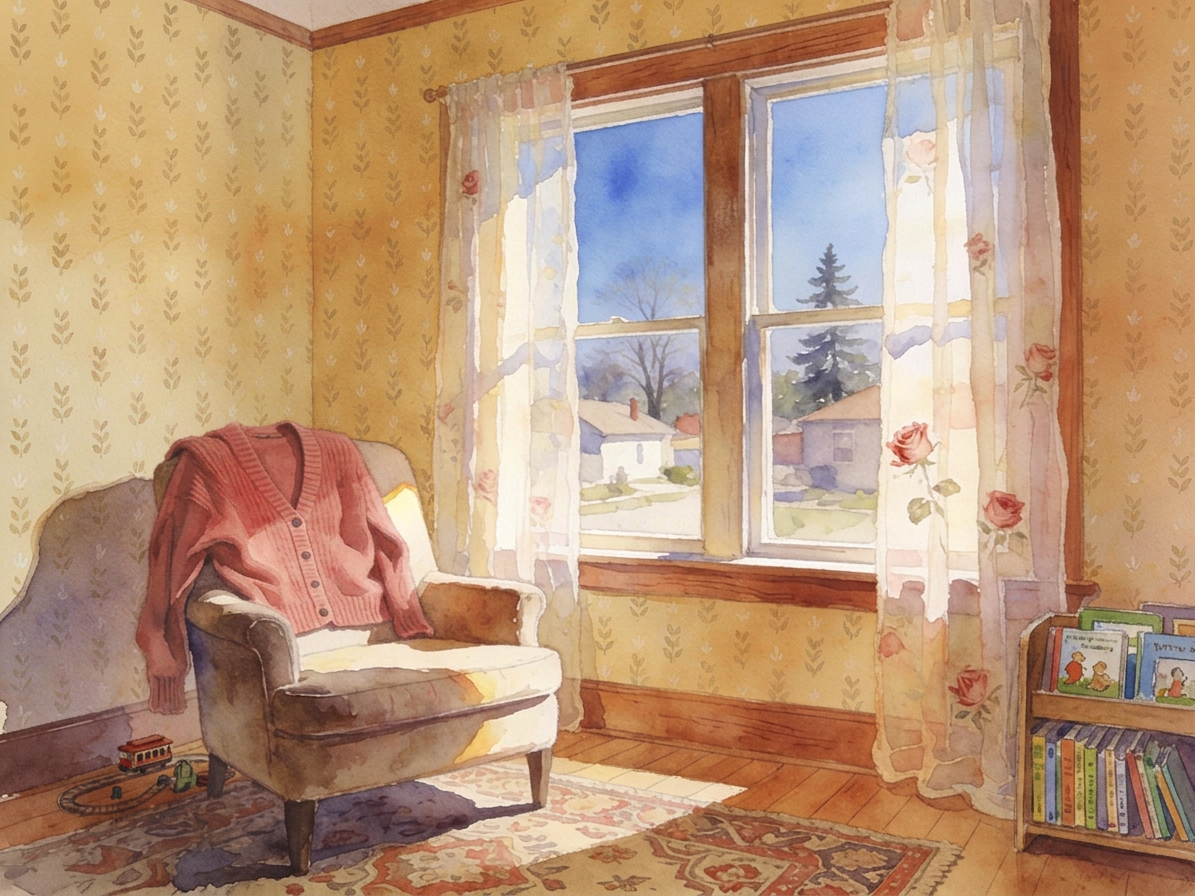
There are people in your life right now who are asking one question when they really mean another. Slow down enough to hear the second one.
He made silence easy to sit in
His most recognized quality — the one people always mention when they talk about what made him different — was the pause. He would ask a child a question and then wait. Not the polite wait of someone who has already decided what they think. The real wait. The unhurried, completely present wait that says: your answer matters, and I will not fill this space until you are ready to fill it.
In a world that grows louder and faster every year, that kind of silence is almost countercultural. Most of us are so uncomfortable with it that we rush to fill it — with advice, with reassurance, with the next question before the first one has been answered. We perform listening while we wait for our turn to speak.
Rogers actually listened. You could see it in his face. He was genuinely curious about what the person in front of him was going to say. That curiosity — that real, unhurried interest in another person’s inner life — people can sense it the moment you start talking. And it changes everything about the conversation.
The next time you ask someone how they are, try waiting long enough to find out.
He made difficult things survivable
In 1969, the Nixon administration proposed cutting federal funding for public broadcasting in half. Rogers was asked to testify before a Senate subcommittee chaired by Senator John Pastore — a famously tough, skeptical Rhode Island senator who had little patience for sentiment and even less for what he probably expected from a children’s television host in a cardigan.
Rogers had a written statement. He set it aside and spoke from the heart instead, reading the room and understanding instinctively that Pastore didn’t need more data. He needed to feel something true.
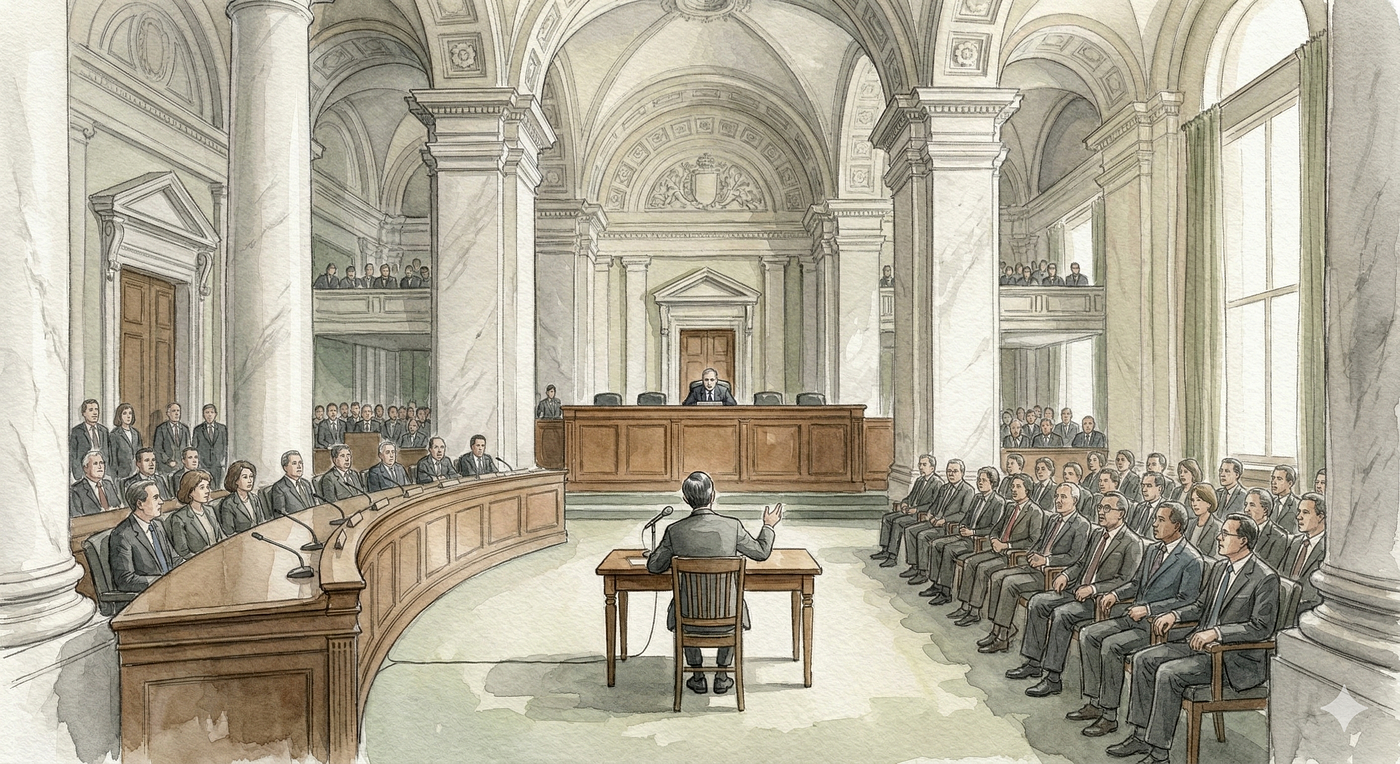
For six minutes Rogers spoke about anger and feelings and what children need from the adults in their lives. He recited a song from his program — “What do you do with the mad that you feel?” — without any apparent self-consciousness. When he finished, Pastore sat for a moment and said: “I think it’s wonderful. I think it’s wonderful. Looks like you just earned the $20 million.”
A hardened senator, in the middle of a budget hearing, moved to tears by a quiet man who simply refused to make the difficult thing more complicated than it needed to be.
It wasn’t a trick — not charm, not performance, not rhetorical brilliance. The willingness to name the hard thing plainly, stay present with it, betting on the truth instead of a cleaver plan. Rogers walked into the most adversarial room imaginable and made it safe. Not by avoiding the difficulty. By moving toward it with complete calm.
He made every room better by being in it
In 1997, Rogers received a Lifetime Achievement Emmy. He walked onto the stage surrounded by some of the most celebrated people in the entertainment industry, accepted his award, and then did something no one expected. He asked the audience to take ten seconds of silence to think about the people who had loved them into being.
***
The room full of television stars went quiet. And stayed quiet. For ten full seconds, you could hear the hum of the air-conditioning, which is an eternity in any room, let alone on live television. Every person in that auditorium turned inward and thought about someone who mattered to them.
He had done it again. Walked into a room with its own agenda and its own energy and, without force or manipulation, turned it into something else entirely. A space for gratitude. A moment of genuine human connection in a room not designed for it.
This is where Mr. Rogers really lived. Not a technique. A way of being. He brought complete presence and genuine care into every room he entered. And every room was different for it.
What this has to do with you
Years after I watched Mr. Rogers as a boy, I was given a small piece of evidence that his gift was not mine alone and not limited to my generation. My son was about six or seven and was supposed to be done with screen time for the evening. I walked past the room and found him sneaking — with great dedication — a little extra time with Mister Rogers’ Neighborhood. He wasn’t watching cartoons. He wasn’t playing a game. He had chosen, out of everything available to him, to sit with that quiet man in that quiet neighborhood.
I didn’t say a word. I just walked away smiling.
Whatever Rogers was doing, it crosses generations. It reached my son the same way it reached me — not through instruction or obligation, but through something that felt like recognition. Like finding a friend who already knew you. That’s not nostalgia. That’s something that doesn’t have an expiration date.
The greatest thing we can do is to help somebody know that they’re loved and capable of loving. — Fred Rogers
You don’t need a television show. You don’t need a Senate hearing or a lifetime achievement award or a cardigan — though the cardigan couldn’t hurt.
What Rogers practiced across thirty-three years and millions of interactions was a set of deeply human skills that any of us can develop. Staying present with difficult emotions rather than rushing past them. Building the conditions for honest conversation before you try to have one. Paying attention to what people are saying beneath what they appear to be saying. Asking good questions and then waiting — really waiting — for the answers. Naming hard things plainly rather than dancing around them. Walking into rooms with the intention of making them better.
None of this requires a credential or a title or a particular personality type. It requires intention. It requires practice. And it requires the belief — the same belief Rogers carried into every room he ever entered — that the people around you deserve someone who will take the time to make things a little easier for them.
The world doesn’t need more noise. It doesn’t need more certainty, more argument, more performance. It needs more people who know how to slow down, pay attention, and make the hard things easier to bear.
It needs more Mr. Rogers.
The question worth sitting with — the one I keep coming back to — is this:
***
who in your life needs you to show up that way right now?
At IntoWisdom Group, we help leaders, coaches, and facilitators develop the skills to make every room they enter a little better. If this resonates, I’d welcome a conversation. intowisdomgroup.com

(All images by Adobe Stock, Gemini, Perplexity, and John Losey)
(AI was used in this article for research, grammar, and feedback. All content is the work of the author. The author has significantly edited any contributions from AI.)
This article first appeared on Medium.