

The Power of Internal Performance Coaching
Picture Raul, a mid-level insurance manager, stuck in his career. High-performing but overlooked for advancement, he couldn’t access external coaching due to budget constraints. Through his supervisor, Rick, trained in The Total Performer Model, the company’s internal coaching initiative, Raul experienced a different approach. Instead of being “fixed,” he was asked thoughtful questions to clarify his challenges and define success. Guided by a simple, actionable plan, Raul soon found new opportunities, eventually transitioning into a more promising role. Inspired, Raul trained in the same coaching method to empower his own team.
Such stories now thrive within this organization, where internal performance coaching has woven itself into the fabric of their culture, building self-sufficiency, trust, and shared growth from inside.
Why Coaching Cultures Matter
- 51% of companies with strong coaching cultures report higher revenue than industry peers (Human Capital Institute).
- 62% of employees in these companies rate themselves as highly engaged (Human Capital Institute).
- Companies with effective managerial coaching see 41% less absenteeism and 59% lower turnover (Gallup, 2025).
- Combining coaching with onboarding reduces first-90-days turnover by up to 29% (SHRM, 2025).
What Internal Performance Coaching Really Is — and Isn’t
At its heart, internal performance coaching is a powerful partnership that fosters positive thinking and performance, aimed at unlocking an individual’s highest potential to do more, better. This approach, exemplified in the FACT-Based™ Coaching model created by Fred Harburg, helps people elevate the skills they already possess — without replacing foundational training.
Understanding what internal coaching is not helps clarify its true power:
- It’s not directive advice or simple teaching.
- It’s not harsh, punitive, or remedial “last-resort” performance management.
- It’s not manipulation or therapy, but a compassionate, skilled inquiry.
- It builds self-sufficiency, not dependence.

Performance coaching digs to the core of challenges or opportunities, helping individuals make clearer, empowered choices.
Building a Coaching Culture: Everyone a Driver of Growth
Performance coaching isn’t optional — it’s a fundamental leadership responsibility. When coaching is woven into everyday interactions, entire cultures shift:
- Engagement deepens; people thrive.
- Performance rises; teamwork strengthens.
- Retention improves; turnover declines.
- Organizations become agile, mission-driven, and values-centered.
Coaching spreads like a “positive virus,” transforming teams into adaptable, learning organizations where growth happens naturally.
The FACT-Based™ Coaching Model by Fred Harburg
This simple and practical four-step process equips leaders and contributors alike to have meaningful coaching conversations:
· Form Foundation: Building trust, clarifying roles and confidentiality, and ensuring psychological safety underlies every interaction.
1. Frame the Issue or Opportunity — Clarify the real challenge or growth opportunity by looking beyond surface symptoms to root causes. Define what success looks like from the individual’s perspective. Set the coaching context and purpose clearly without jumping prematurely to solutions.
2. Articulate and Assess Alternatives — Encourage broad, creative thinking to generate potential ways forward. Then apply critical thinking to evaluate these options against the success criteria set earlier, narrowing down to the most promising solutions.
3. Commit to Action — Co-create a concrete, actionable plan with clear steps. Address potential obstacles and secure genuine, values-driven commitment from the performer. Without full commitment, even the best intentions falter.
4. 4. Track Progress — Monitor outcomes, celebrate wins, and learn from setbacks. Adjust approaches as needed to keep moving forward. This phase builds resilience, agility, and continuous improvement over time.
- Synthesis: Reflection and learning happen continuously, helping the coach and performer grow together, and enabling the spread of coaching capability throughout the organization.
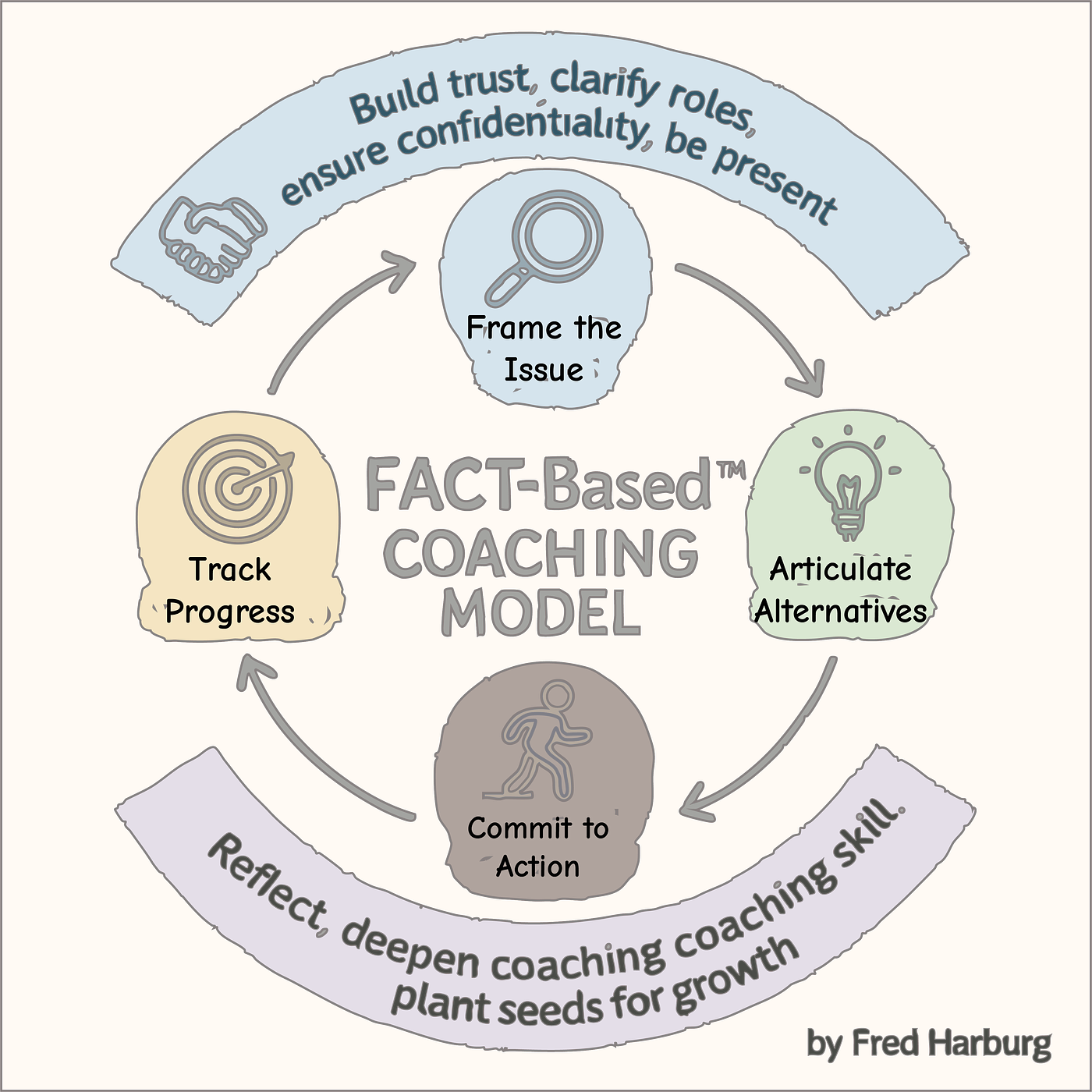
This model not only supports supervisor-direct report coaching but encourages peer-to-peer and even upward coaching relationships, creating a truly inclusive coaching culture.
Conclusion: Start Building Your Coaching Culture Today
Internal performance coaching powered by Total Performer Development and Fred Harburg’s FACT-Based™ model transforms ordinary conversations into powerful growth moments. It builds resilient, high-performing organizations by empowering every individual to “do more and be more.”
Here’s how to begin:
- Reach out to the IntoWisdom Group for Customized Total Performer Development training and consulting.
- In your next conversation, ask questions that clarify real challenges and explore new possibilities.
- Commit to learning the FACT-Based™ process and practicing it regularly.
- Encourage your team to become “coaching partners,” sharing insights and support.
By embedding coaching at every level, you spark engagement, reduce costly turnover, and make growth the heartbeat of your organization. The time to act is now — because coaching is not just a skill, it’s the ultimate leadership advantage.

(All images by Adobe Stock, Copilot, Pexels, and John Losey)
(AI was used in this article for research, grammar, and feedback. All content is the work of the author. The author has significantly edited any contributions from AI.)
This article first appeared on Medium.