
Restructuring. New systems. Layoffs. Change has become the only constant, and people are struggling to keep up. The secret isn’t just managing change but guiding people through transition. Here’s a human-centered approach that blends structure with support to build resilience, not resentment.
Change is constant. Chaos feels normal. But people aren’t machines, they need more than a plan. They need a path.
I’ve experienced several organizational restructurings, new processes, and changes in systems in my career. I got RIF’d (reduction in force) in 2016, and many of my friends and colleagues have been laid off since then. I’ve seen offices disrupted by the introduction of new programs and processes. Even a new filing system can throw employees into a tailspin. Whether the change is big or small, people can feel traumatized by the shifting roles, expectations, and competencies.
But what if there’s a better way to lead through change — one that doesn’t leave people burned out, resentful, or clinging to outdated practices?
In my current role as an Organizational Ecologist (Org Development Consultant), I’ve guided organizations through change and initiated changes for my clients. I’ve made a study of how organizations change and how it impacts individuals. One thing that has become clear to me is that organizations change while people transition. Organizational Change deals with systems, processes, positions, and procedures. It tends to be situational and external.

Individuals experience changes differently from organizations. Where organizational change can be implemented on a specific day and time, that moment is only the beginning of a transition for the individuals. Change happens in a moment. Transition takes a season. Transitions happen over time and involve emotions, adaptations, and letting go of the old to embrace the new. Transitions involve the internal journey of the people touched by change.
Understanding this disruption from the lenses of both the organization and the individual is crucial to managing change and guiding people through transitions.
The truth is, most change models fail because they focus either on logistics or emotions, not both. That’s why leaders who master transitions blend structured systems with deep emotional intelligence. Let’s explore an integrated approach that actually works in today’s messy reality.
Why an Integrated Model?
Change isn’t a checkbox exercise. When a higher education counseling department I advised shifted to telehealth services, their biggest hurdle wasn’t technology, it was caseworkers grieving the loss of in-person client connections while learning new systems. Traditional models would’ve treated these as separate issues. That’s why I developed the 4-Phase Integrated Change & Transition Model, a framework built from the best of ADKAR, Bridges, and the Change Curve, designed to address both systems and souls.
An integrated approach recognizes that humans are messy. We need:
- Structure (clear steps to build new skills)
- Support (space to process loss and uncertainty)
- Adaptive Systems (tools to handle the next inevitable upheaval)
This is where blending Bridges’ Transitions, the ADKAR model, and the Change Curve shines — it addresses both the mechanics and the heart of change.
The Models: A quick overview
Below are brief, high-level overviews of three influential change management models used in the Integrated Change Model: the Change Curve, Bridges’ Transition Model, and the ADKAR model. It is essential to recognize that these summaries offer only a basic understanding of each framework. Each model is built upon extensive research and practical application, containing a wealth of detailed insights, tools, and techniques that go significantly beyond the scope of these concise descriptions. Further exploration of each model is recommended for a deeper and more comprehensive understanding of their nuances and applications.
The Change Curve
The FranklinCovey Change Curve describes the typical emotional and productivity journey during change:
- Status Quo: where individuals assess what is working and what will change, sometimes initially experiencing Denial/Shock.
- Disruption: the “messy middle”, often marked by Resistance and negative emotions.
3. Adoption phase: characterized by Exploration and tentative experimentation.
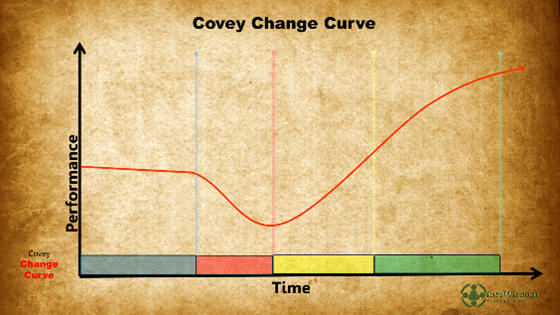
4. Innovation/Commitment: Reflecting commitment with renewed energy and sustained behavioral change.
Bridges’ Transitions Model
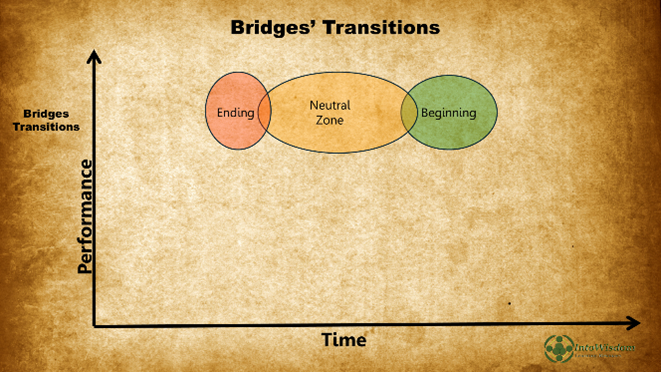
Bridges’ Transition Model involves three key stages in the psychological process of adapting to change:
· Endings, Losing, Letting Go: This is the initial phase where individuals must acknowledge what is ending and the associated losses, requiring leaders to facilitate the management of emotions like grief and resistance while recognizing past value.
· The Neutral Zone: This represents the uncertain interim period after the old has gone but before the new is fully established, offering opportunities for exploration and new connections, where leaders should support ambiguity tolerance and track short-term wins.
· New Beginnings: signifies the point when individuals start to accept the change, develop a new sense of identity, and embrace the new way forward, characterized by renewed energy that leaders should reinforce through recognition and cultural integration.
ADKAR
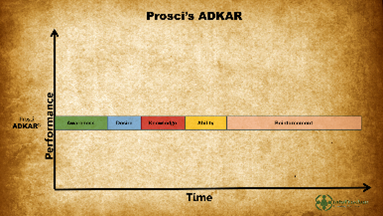
Proci’s ADKAR model is a five-step framework describing an effective process to communicate change to individuals:
Awareness involves understanding the need for change.
Desire is about developing the will and commitment to participate in the change.
Knowledge includes learning about how to change and what the change entails.
Ability is the capacity to implement the change and perform the new skills.
Reinforcement focuses on sustaining the change through feedback, recognition, and embedding it into the culture.
The 4-Phase Integrated Change Model
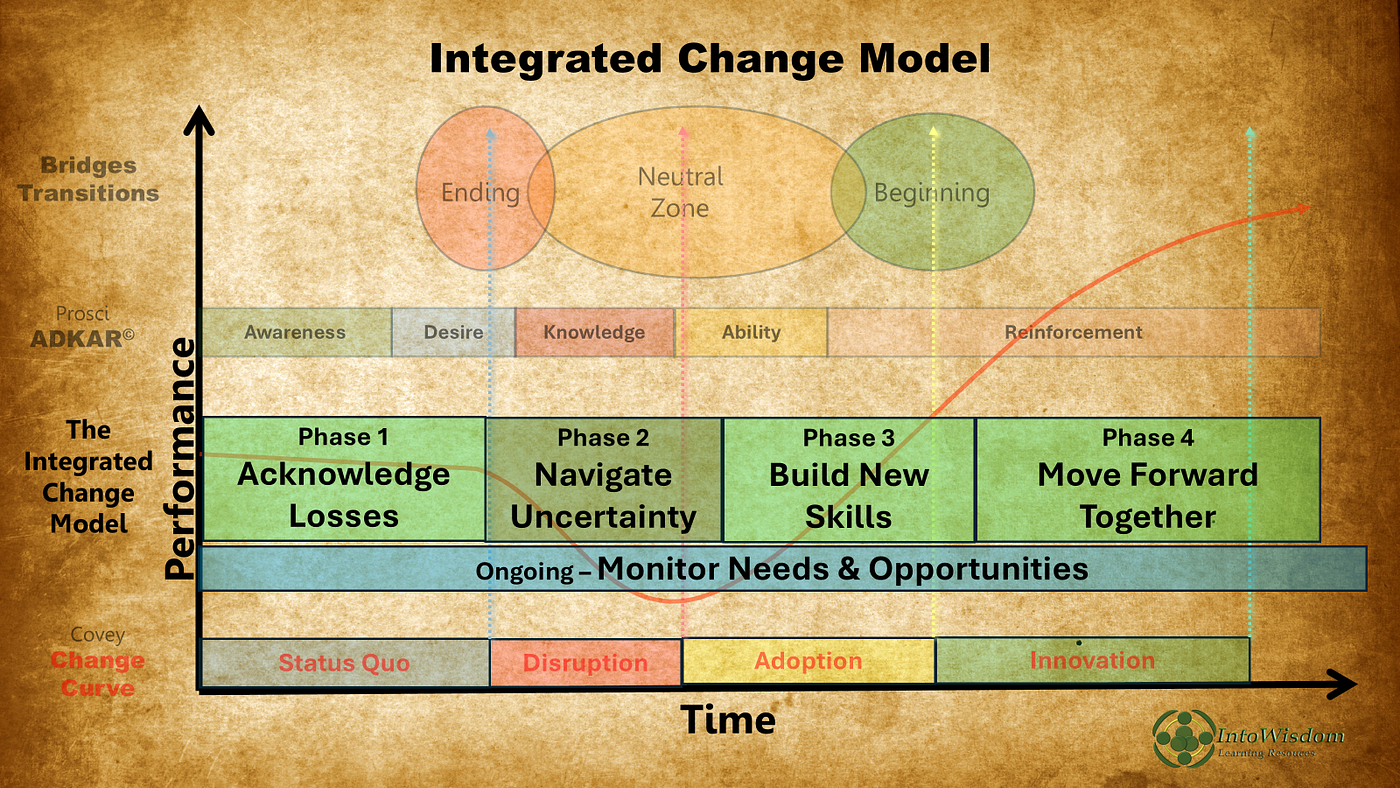
After briefly reviewing the Change Curve, Bridges’ Transition Model, and the ADKAR model, it’s important to understand that the 4-Phase Integrated Change & Transition Model directly incorporates key concepts from these foundational frameworks to provide a comprehensive approach to managing change. This integrated model strategically blends the insights from each, recognizing that successful change initiatives must address both the emotional journey of individuals and the practical steps for organizational adaptation. By drawing upon these established models, the 4-Phase Integrated Model offers a holistic and actionable guide for leaders navigating the complexities of change and transition.
Phase 1. Disruption & Endings: Honor the Loss
“We’re just changing the software, not your job!”
Sound familiar? Dismissing concerns breeds distrust. Phase 1 involves acknowledging and validating the feelings of loss and uncertainty that accompany the initial shock of change.
Professional Example:
When an engineering firm sunsetted its legacy CRM, the administrators were hesitant. Leadership didn’t just train on the new system. They kept the old “notebook” system on the shelves, a “Wall of Wins” displaying client projects managed through the old platform, validating its legacy while pivoting to new tools.
Personal Story:
After knee surgery forced me to stop my normal exercise routine, I journaled about what I’d lost (my stress-relief ritual) before exploring new exercises. The grief didn’t vanish, but naming it helped me adapt.
Model Integration:
· Change Curve: Addresses the initial Shock, Denial, and Resistance that individuals experience when change is introduced. The “acknowledgment sessions” help people move from denial toward acceptance.
· Bridges’ Transitions Model: Directly incorporates the Endings, Losing, Letting Go stage. The focus is on recognizing what is ending and validating the associated losses.
· ADKAR: Uses Awareness to help people understand why the change is necessary and what is being lost. Ritual-building allows people to accept and process their emotions.
What to do:
- “What’s Ending” Roundtable: Schedule a 30-minute team meeting. Ask each person to share one specific thing they will miss about the old way of doing things. As a leader, model vulnerability by sharing your own loss.
- Retirement Ritual: If retiring a system or process, create a symbolic “retirement” event. It could be as simple as a team lunch to reminisce about the old days or a small ceremony to archive old files.
- Skills Inventory: Help your team identify skills that will no longer be needed and skills that will be in high demand. Offer training or mentorship opportunities to bridge the gap.
- Empathy Check-In: In 1:1 meetings, ask, “What’s one thing you’re finding difficult to let go of?” Actively listen without judgment and offer support.
Phase 2. Neutral Zone Exploration: Embrace the Messy Middle
Welcome to emotional whiplash, excitement about possibilities mixed with terror of the unknown. Phase 2 involves navigating the uncertainty and discomfort of the transition period by experimenting with new approaches and normalizing mistakes.
Professional Example:
A nonprofit director navigating changes in grant documentation had caseworkers role-play client conversations. They kept “oops logs” to normalize mistakes, which became a playbook for future transitions.
Personal Story:
When my friend shifted careers, she took freelance gigs in her target field while keeping her day job, a “neutral zone” strategy that reduced financial panic.
Model Integration:
- Change Curve: Acknowledges the Disruption phase, marked by confusion, uncertainty, and negative emotions. The emphasis on experimentation and tracking progress helps people move toward exploration.
- Bridges’ Transitions Model: Emphasizes the Neutral Zone, the uncertain interim period after the old has gone but before the new is fully established. The focus is on tolerance and short-term wins.
- ADKAR: Focuses on Knowledge and Ability, helping people learn how to change and develop the skills needed to implement the change. Low-stakes experiments allow people to build confidence and competence.
What to do:
- “Quick Win” Project: Launch a small, low-stakes pilot project using the new system or process. Focus on learning and experimentation rather than perfection.
- “Mistake Monday” Debrief: Dedicate the first 15 minutes of your weekly team meeting to discussing mistakes made in the past week. Frame it as a learning opportunity.
- Skill-Sharing Sessions: Encourage team members to teach each other new skills. This builds camaraderie and accelerates learning.
- Frequent Feedback Loops: Implement daily or weekly check-ins to gather feedback on the new process. Be responsive to suggestions and adjust as needed.
3. New Beginnings: Cement Progress Without Burnout
The danger here is declaring victory too soon. I’ve seen teams revert to old habits when leaders withdraw support. Phase 3 focuses on solidifying progress by reinforcing new behaviors, celebrating successes, and embedding the change into everyday routines to ensure sustained adoption.
Professional Example:
After an insurance company merged departments, managers held monthly check-ins, or “innovation hours,” where staff proposed refinements to new workflows, turning compliance into ownership.
Personal Story:
When I finally adapted to post-surgery life, I created a morning routine blending old (coffee and journaling on my “comfy chair”) and new (gentle stretching). The mix helped me sustain change.
Model Integration:
- Change Curve: Reinforces the Adoption/Commitment phase, where people begin to embrace the change and experience renewed energy. The focus is on reinforcing new behaviors and celebrating successes.
- Bridges’ Transitions Model: Reinforces the New Beginnings stage, where individuals start to accept the change, develop a new sense of identity, and embrace the new way forward. The focus is on recognition and ownership.
- ADKAR: Focuses on Reinforcement, sustaining the change through feedback, recognition, and embedding it into the culture. Aligning systems and celebrating success reinforces new behavior.
What to do:
- “Success Story” Showcase: Create a forum (e.g., a team blog, a monthly newsletter) to showcase successful implementations of the new process.
- Peer Recognition Program: Implement a peer-to-peer recognition program where team members can nominate each other for going above and beyond in embracing the change.
- Process Documentation: Document the new process clearly and concisely. Make it easily accessible to all team members.
- Regular Check-Ins: Continue to monitor team morale and workload. Be prepared to make adjustments to prevent burnout.
Phase 4. Moving Forward Together: Leveraging Momentum
Change isn’t an event, it’s a skill. The best leaders I’ve worked with treat change and transition as rehearsals for future challenges. Phase 4 sustains momentum by monitoring progress, seizing emerging opportunities, and fostering a culture of continuous adaptation where the team learns and evolves together.
Professional Example:
A small business CEO I coached now starts board meetings with “Early Warning Signs,” a 10-minute scan of team sentiment and external threats using the integrated model’s metrics.
Personal Story:
My family holds “transition check-ins” after major shifts (the start of the school year, new projects, or chore changes). We discuss the good, the bad, and the ugly of what we just went through, a practice born from workplace strategies.
What to do:
- “Lessons Learned” Database: Create a database of lessons learned from past changes. Make it a living document that is regularly updated.
- Cross-Training Program: Implement a cross-training program to ensure that team members can step in and cover for each other during periods of transition.
- Regular Innovation Challenges: Host regular innovation challenges to encourage team members to come up with new and creative solutions to ongoing challenges.
Ongoing: Monitor Needs and Opportunities
Change isn’t a one-time event; it’s a continuous cycle. Even after new processes are in place, leaders must actively monitor evolving needs and spot emerging opportunities. This phase is about building “change muscle,” the capacity to adapt quickly and effectively to whatever comes next.
By incorporating these strategies, leaders can create a culture of continuous improvement and ensure that their teams are always ready to adapt to whatever challenges or opportunities may arise.
The Real Work of Change
Years ago, I worked with an organization through a brutal merger. We followed every checklist traditional change management suggested, yet morale cratered. Only when we paused to share the “why“ for the changes, acknowledged lost autonomy, and created space to experiment did things turn around.
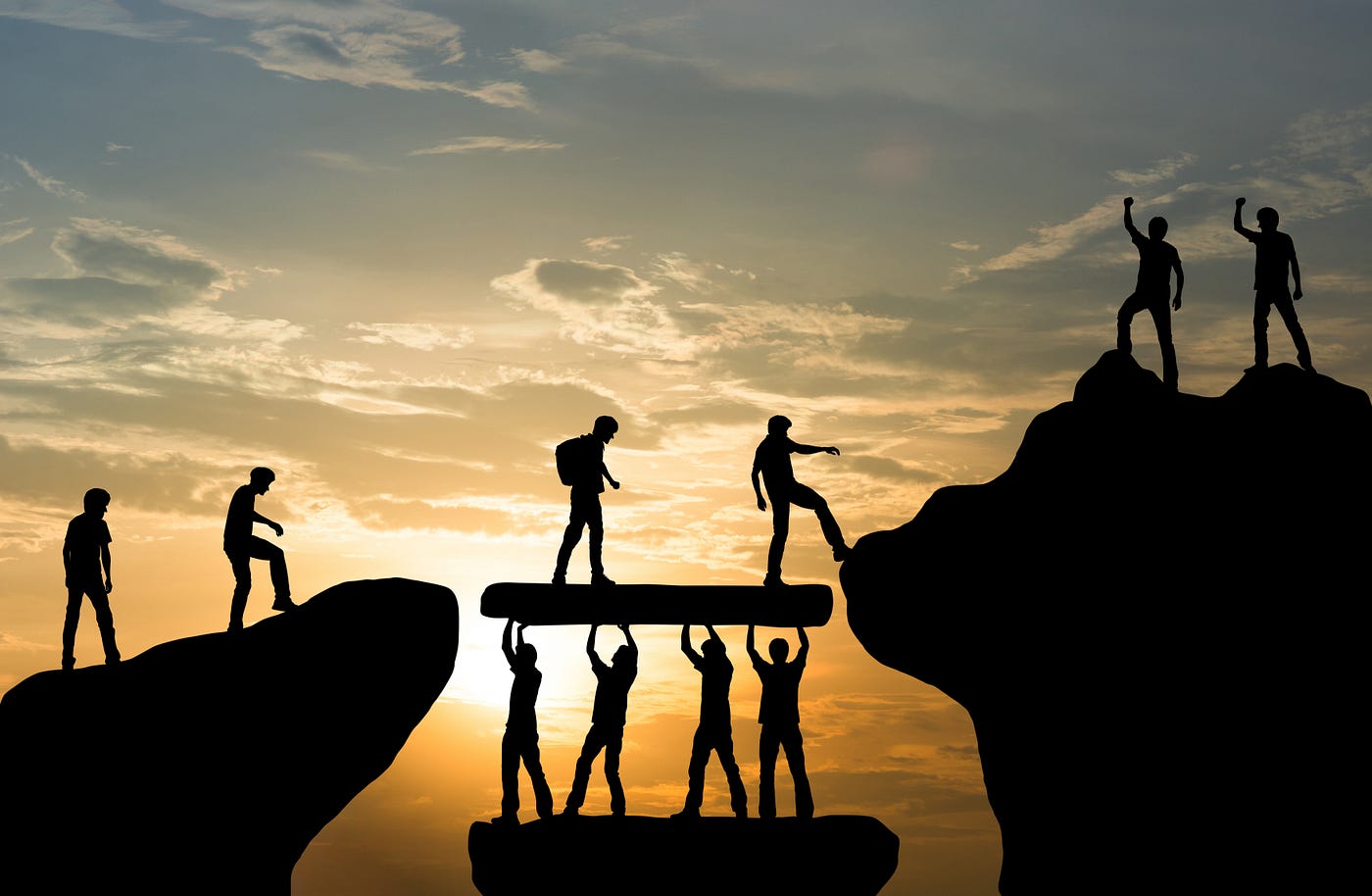
That’s the power of an integrated approach. By honoring both the head (ADKAR’s structure) and heart (Bridges’ emotional phases), and helping people anticipate the path (The Change Curve), you build resilience that outlasts any single transition.
While clear plans and updated systems are essential, lasting success depends on attending to what people feel, need, and fear throughout the journey.
Change initiatives too often become exercises in process management, overlooking the profound human transitions they trigger. While clear plans and updated systems are essential, lasting success depends on attending to what people feel, need, and fear throughout the journey. This integrated model offers a way to balance both: to manage the logistics of change with intention and to support the transitions with empathy and purpose, yielding long-term benefits that extend beyond the immediate change, fostering a culture of adaptability and growth.
Shift the Focus
This week, disrupt the status quo by shifting your focus from tasks to people and asking yourself:
- What’s one process change that’s about to happen on my team or in my organization?
- What can I, as a leader, do to acknowledge and validate my team members’ feelings and insights during this transition?
- How can I personally improve to meet the needs of my team and colleagues in a more effective way?
Then, listen. Truly listen. Let their feedback shape your actions, creating a partnership that welcomes change instead of resisting it. The organizations that lead tomorrow aren’t just adapting; they’re building a culture where people feel seen, supported, and empowered to grow through every transition. The time for change is now. What is one specific step that you will take toward that goal?
(All images by Adobe Stock, ChatGPT, and/or John Losey)
(AI was used in this article for research, grammar, and feedback. All content is the work of the author. The author has significantly edited any contributions from AI.)
This article first appeared on Medium.