

On the cost of unintentional meetings — and what to do before you call the next one

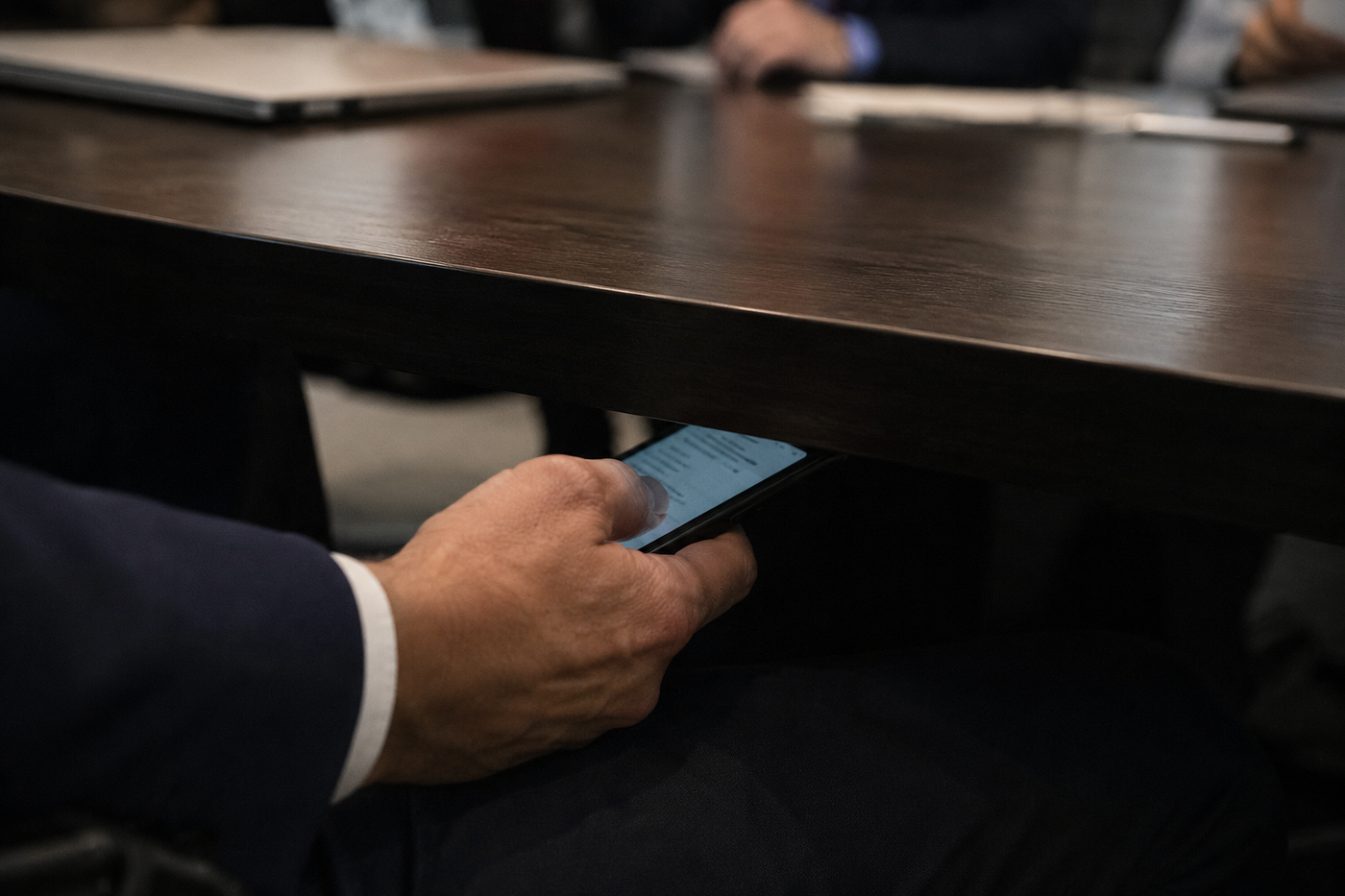
You’re sitting in the conference room, doing your best not to check your phone for email, texts, or social media. This is the third meeting covering the upcoming software rollout. When you walked in 45 minutes ago, you knew the topic of the meeting but had no idea where it was supposed to go. The same people, saying the same things, reaching the same result.
No progress.
If you lead people, manage projects, or sit on any kind of team, you know this feeling. You’ve probably felt it this week. And if you’re honest — really honest — you’ve probably also called that meeting. Not because you were careless or incompetent, but because calling a meeting is easy, and designing and facilitating one is harder, and most of us were never taught the difference.
Research confirms what your gut knows — according to a 2023 Microsoft study of more than 31,000 workers, the majority of employees say ineffective meetings are their single biggest obstacle to getting work done.
The cost is more than an hour of lost productivity, though it is that. It’s something quieter and more damaging. It’s the senior engineer who stops offering solutions because she’s learned they won’t go anywhere. It’s the action item that never got owned because nobody was sure a decision had actually been made. It’s the VP who leaves your meeting and privately wonders, not for the first time, whether this team actually knows where it’s going.
Bad meetings don’t just waste time. They are a sign of disrespect. They erode trust. And trust, once eroded, is slow and expensive to rebuild.
Here’s the thing most leaders don’t realize: the majority of what makes a meeting fail was decided before anyone walked in the room. Which means the fix begins there too.
Two Things Have to Go Right
Running an effective meeting requires two distinct acts of leadership, and most people only think about one of them.
The first is what happens in the room — the skill to read the energy, manage the conversation, surface real disagreement, keep things moving without steamrolling anyone, and bring the work to a clear conclusion. That matters. It requires genuine skill, and it doesn’t happen by accident. Experienced facilitators spend years developing it. Good leaders work at it deliberately.
But the second act — what happens before the room fills — is where most meetings are quietly won or lost. The preparation. The design. The ten minutes of honest thinking that turns a gathering into a working session.
You can be gifted in the room and still run a bad meeting if you walk in without a clear sense of what you are trying to accomplish. And you can be a relatively inexperienced facilitator and run a surprisingly effective meeting if you did the work of designing it well.
Skill and preparation are not competing priorities. They are partners. One without the other is an incomplete act of leadership.
The meeting isn’t the container for the work. In most organizations, it is the work.
You Know a Bad One When You’re In It
There are signs. You’ve seen them. Maybe you’ve contributed to them without quite realizing it. There was no agenda, or the agenda was a list of topics with no indication of what each one was supposed to produce. People walked in not knowing whether they were there to make a decision, share information, solve a problem, or simply be updated on something that could have been handled in an email.
Not all the right people were in the room. Someone who needed to weigh in wasn’t there, so the conversation kept circling back to “we should probably check with so-and-so before we move forward.” Someone else who didn’t need to be there sat through ninety minutes of discussion that had nothing to do with their work, and they will think twice before accepting your next invitation.
There was no real discussion. People reported. People nodded. One or two people talked more than everyone else combined. Nobody pushed back on anything in a way that moved the thinking forward. The conversation that mattered happened in the hallway afterward, between the two people who had opinions but didn’t feel safe enough — or didn’t see the point — in voicing them in the room.
And when it ended, nobody was quite sure what had been decided, who owned what, or when anyone would reconvene. The meeting produced a follow-up meeting.
None of this is inevitable. All of it is a design problem.
Intentional Design Is Not Complicated. It Is Just Rare.
Being intentional about a meeting doesn’t mean spending three hours preparing for a one-hour conversation. It means asking a few honest questions before you build the agenda — or before you decide whether to call the meeting at all.
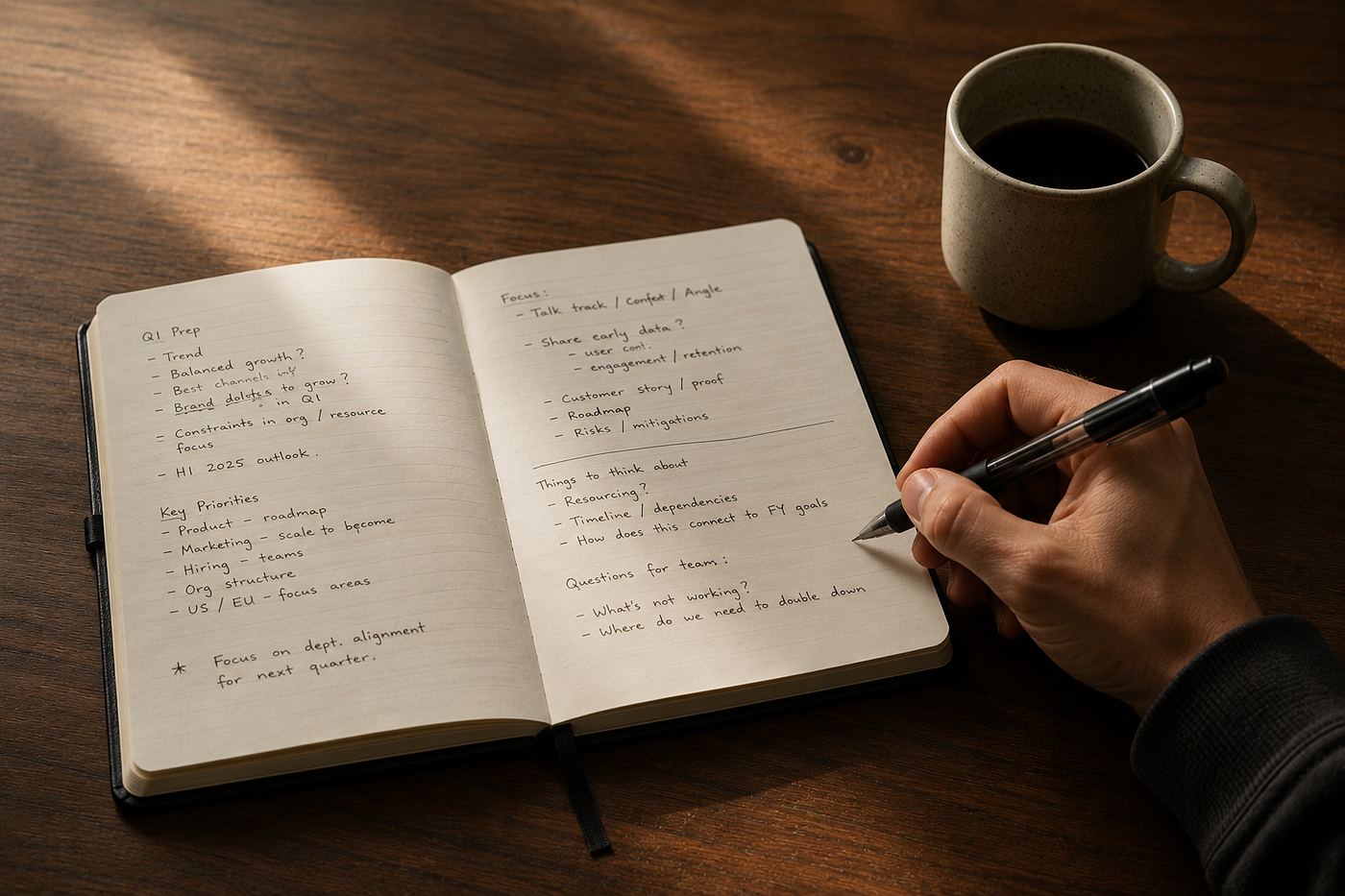
What does this group need right now? Not what needs to be covered, but what the people coming into this room need to move forward. Do they need information? Do they need to make a decision? Do they need to work through a conflict that’s been slowing everything down? The answer shapes everything else.
What does success look like when this ends? This is the question most leaders skip, and it’s the most important one. If you can’t finish the sentence — “This meeting will have been worth everyone’s time if, by the end, we have…” — you’re not ready to design the meeting yet. Vague goals produce vague outcomes. If you want a decision, design for a decision. If you want alignment, design for alignment. They are not the same meeting.
What conditions do people need to do their best thinking here? This one sounds soft until you’ve watched a meeting fail because the wrong person dominated the room, or because the one person who held the critical perspective never felt safe enough to offer it.
Psychological safety is one of those phrases that gets used so often it starts to feel like wallpaper. But the concept is neither soft nor complicated. People will not say what they actually think in rooms where they fear being embarrassed, dismissed, or punished for speaking up.
When that happens, you don’t get their best thinking — you get their safest thinking. Nodding. Silence. The hallway conversation that should have happened in the room.
Amy Edmondson, the Harvard researcher who has studied this more carefully than almost anyone, found that the highest-performing teams weren’t the ones where people agreed most
— they were the ones where people felt safe enough to disagree, raise problems early, and admit when something wasn’t working. That’s not a cultural nicety. That’s a performance variable.
Building that safety is partly a facilitation skill. But it begins in the design — the right to pass, the small group conversation before the full group share, the written reflection that lets the quieter thinker contribute before the loudest voice sets the frame. These are decisions you make before anyone walks in, and they determine whether the people in your room bring their real thinking or their safe thinking.
Your answers to these questions don’t just inform the agenda — they are the agenda.
The Architecture of a Working Session
That safety doesn’t appear by accident — it’s built into the structure of the session itself.
Think of a well-designed meeting the way a good architect thinks about a building. The structure isn’t visible when everything is working. You just feel comfortable, oriented, and able to do what you came to do. When the structure is missing, you feel it — the confusion, the friction, the sense that something is off but you can’t quite name it.
Every working session has a basic architecture, whether you design it deliberately or let it happen by default. The question is whether the architecture serves the people in the room or just fills the time.

Start with connection before content or process. This isn’t about icebreakers for the sake of icebreakers. It’s about the simple, documented reality that people think better, take more risks, and engage more honestly when they feel some basic sense of belonging in the room. Two minutes of genuine acknowledgment — of where the group is, what they’re carrying, what’s at stake in the work ahead — does more for a meeting than most people realize. Skip it consistently, and you’ll wonder why your team always seems guarded.
Move from simple to complex. Open with what people know before you ask them to wrestle with what they don’t. Build toward the hard conversation rather than leading with it. This isn’t about avoiding difficulty — it’s about earning the right to go there. A room that hasn’t warmed up yet will default to safe answers when you ask hard questions.
Design for real participation, not just presence. If the same three people do all the talking in every meeting you run, that’s not a personality problem — it’s a design problem. Small group conversations before full group discussion, written reflection before verbal sharing, structured turn-taking for high-stakes topics — these are not complicated techniques. They are decisions you make in the planning stage that change who gets heard when the meeting is live.
Build in a landing. Know, before you start, how you intend to close. What gets named, decided, assigned, or acknowledged before people walk out? The most common failure of otherwise decent meetings is the ending — the vague trailing off, the “okay, let’s think about next steps,” the assumption that everyone absorbed the same conclusions from the same conversation. They didn’t. Be explicit. Who owns what, by when, and how will you know it happened?
The Part That Comes After
Most leaders treat the meeting as over when the room empties. The best ones don’t.
The habit of reflection — brief, honest, and consistent — is what separates the leader who keeps running the same meeting from the one who keeps getting better at running them. Not a formal debrief every time, but a few minutes with yourself or a trusted colleague: What worked? What didn’t? Where did I lose the room? What would I do differently?
Reflection is part of the craft. Every skilled facilitator does it. The best ones have been doing it for years, and they still do it after every session, because they understand that mastery in this work is a practice, not a destination — and it only deepens if you keep paying attention.
The Next One
Here’s what this comes down to.
You will have another meeting this week. Probably more than one. Some of them will be yours to design and lead. And the people who walk into those rooms — your direct reports, your peers, your senior leaders, your most talented and most frustrated team members — they will bring their full selves, or they will bring the guarded, waiting-to-leave version of themselves, depending in large part on what you did before they arrived.
That’s not an exaggeration. It’s what’s actually happening in organizations every day, in conference rooms and Zoom windows and hybrid setups where half the team is remote and half is in the room and nobody quite feels like they’re in the same conversation.
The skill you bring into the room matters. Develop it. Invest in it. Find people who are better at it than you and watch how they work.
But before the skill — the preparation. The honest questions. The ten minutes of intentional design that tells everyone in the room, without a word, that you thought about them before they arrived. That their time means something to you. That this meeting has a reason to exist.
That’s not a technique. It’s a decision about what kind of leader you want to be.
The same people don’t have to keep saying the same things. The room doesn’t have to keep producing the same result.
But that only changes when someone decides — before the meeting, not during it — that this time they’re going to design it differently.

© 2026 The IntoWisdom Group. This article is part of an ongoing series on facilitation and leadership.
(All images by Adobe Stock, Chat GPT, and John Losey)
(AI was used in this article for research, grammar, and feedback. All content is the work of the author. The author has significantly edited any contributions from AI.)
This article first appeared on Medium.