
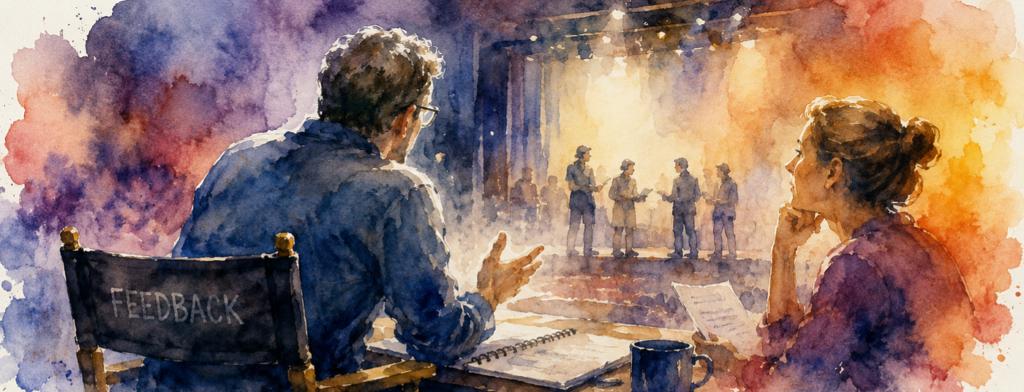
The fix had been sitting in my wife’s community theater group for years. It took a pandemic Zoom call, mid-apology, for me to finally notice it.
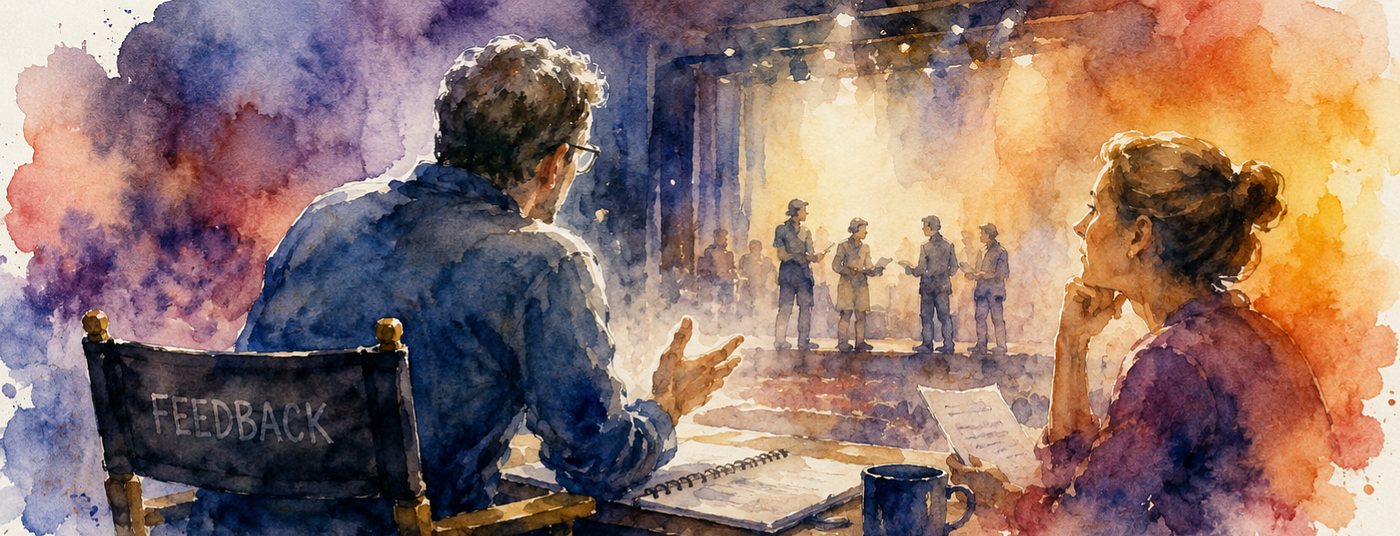
I have a confession. During the pandemic, I was one of the worst types of reviewer you could bring a nearly-finished idea to.
Not because I was harsh — because no matter how close someone was to done, I’d hand them notes for a bigger version of the thing they never asked for and had no time to build.
Here’s the scene: a handful of us had started the Guided Practice Groups, trying to figure out how to run programs on Zoom before any of us knew what we were doing. Each week, someone brought something to try out on the rest of us.
One week, a facilitator I’ll call Dana brought an activity she was running the next morning. It was done — tested, timed, tightened as far as she could see. All she wanted was a second set of eyes on the details.
I read it over and told her the whole second half might land better restructured around a different theme.
She didn’t use the note. She couldn’t have — eleven hours before she had to run it, and I’d just handed her a demolition plan for a house she was moving into the next morning.
Here’s the part I’d rather leave out, except it’s the actual point: Dana wasn’t the only one. I did this more than once — nearly-finished work, a details request, a bigger idea handed back instead. Generous, thorough, and completely unusable.
That wasn’t a Dana problem. And it wasn’t totally a me problem either. It was a language problem — neither of us had the words for what she actually needed, and I didn’t have a name yet for what I kept doing wrong.
The Fix I’d Been Watching for Years
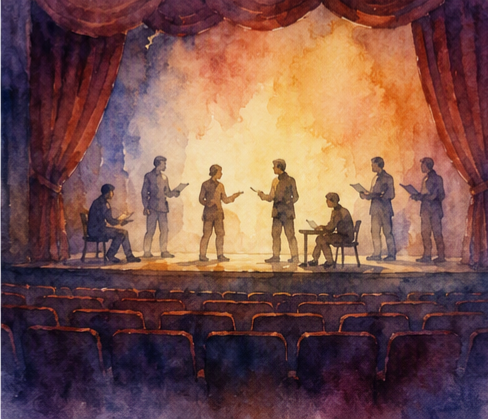
My wife has been part of a community theater group since long before any of this — well before the pandemic, well before Guided Practice Groups existed. I’d sat in on enough rehearsals to half-absorb a system without ever thinking to name it.
Nobody gives an actor line notes during blocking rehearsal, or calls lighting cues while people are still finding their marks. Every stage of a production asks for its own kind of attention, and everyone backstage just knows which kind is in season. I’d watched it a hundred times without once thinking of it as something worth stealing.
It clicked in that same room, mid-sentence, while I was still explaining the demolition plan I’d just handed her. I’d been staring at the fix for years. I just needed Dana to say something true out loud.
The Theater Feedback Model
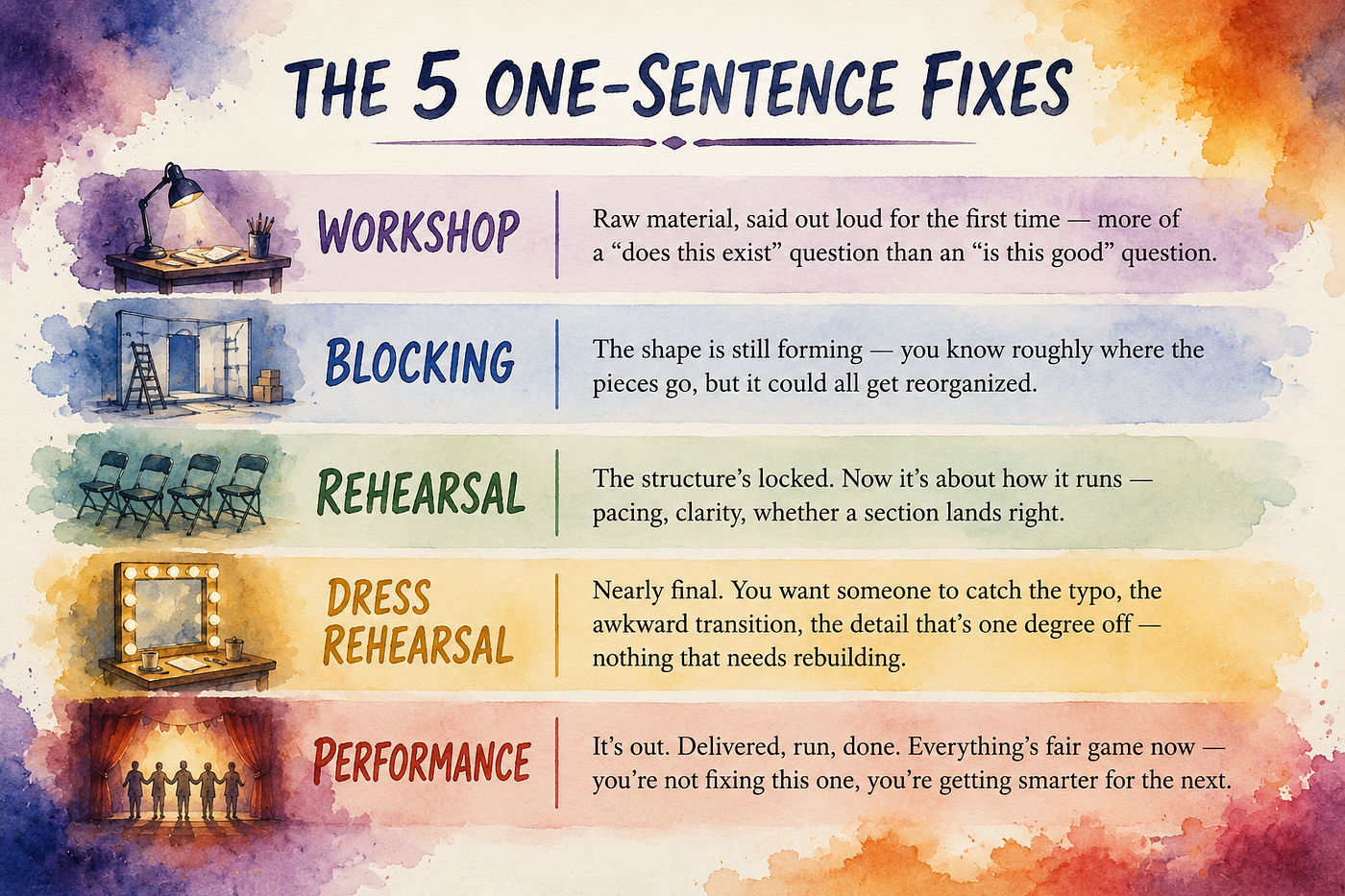
I built what I now call The Theater Feedback Model. Five words, borrowed from the stage, each one asking for a different kind of attention.
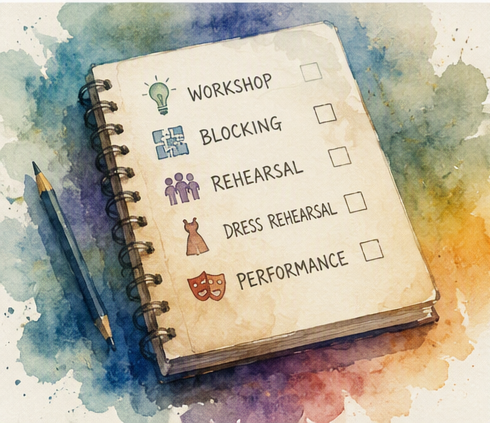
Workshop
Raw material, said out loud for the first time — more of a “does this exist” question than an “is this good” question. This wasn’t Dana’s stage, or most of the people I did this to. Few were showing up with half-formed napkin sketches asking for gut checks. That would have been the easy mistake to avoid. I somehow specialized in the harder one.
Blocking
The shape is still forming — you know roughly where the pieces go, but it could all get reorganized without anyone crying about it. This is the stage I kept mistaking other people’s work for, treating something nearly finished like the shape was still up for grabs because a bigger idea had occurred to me and I wanted somewhere to put it. Convenient, for me. Considerably less so for whoever built the thing.
The note I gave Dana lived here — restructure the whole second half around a different theme. A legitimate Blocking-stage note, if she’d been in Blocking. She wasn’t. She was one day from done.
Rehearsal
The structure’s locked. Now it’s about how it runs — pacing, clarity, whether a section lands right. Suggesting a restructure at this point is like telling an actor, weeks into rehearsal, that the play might work better as a musical. Technically true. Deeply unhelpful. Dana was past this stage.
Dress Rehearsal
Nearly final. You want someone to catch the typo, the awkward transition, the detail that’s one degree off — nothing that needs rebuilding. This was Dana’s actual stage, and the one I got wrong most. She wasn’t asking me to see the show differently. She was asking me to look closely at what she’d already built. I gave her Blocking notes for a Dress Rehearsal problem, and she paid for the gap with a sleepless night.
Performance
It’s out. Delivered, run, done. Everything’s fair game now — you’re not fixing this one, you’re getting smarter for the next. I only reached this stage with my own mistake because of what happened next, on that same call — the part I’m about to tell you. Most people don’t give you that chance. Most just quietly stop bringing you their work.
The One Sentence Fix
Here’s the whole model, in practice: before you ask for feedback and hand someone your work, tell them what stage it’s in.
This isn’t really for my benefit, though it would’ve saved me an apology. It’s for yours — you’re the one who knows what you need. I’m just the guy staring at your nearly-finished activity, guessing. Don’t make me guess.
Say it plainly, before you hit share screen, before you send the draft, before the meeting starts:
“This is a workshop — I just want to know if the core idea holds up.”
“We’re still blocking this — tell me if the shape works, not how any one part reads.”
“This is rehearsal — give me notes on how it runs, not whether it should exist.”
“This is dress rehearsal — please only flag what I can fix by tonight.”
“This already went out — anything goes, it’s for the next one now.”
Five sentences. Memorize whichever fits your Tuesday. You don’t need my permission, and you don’t need to explain the model. Just name the stage and let the reviewer catch up.
The Three Honest Moves
Naming the stage also tells the reviewer what they owe you if their note doesn’t match what you asked for. Say “this is dress rehearsal,” and they still spot something structural — here’s what a reviewer worth listening to does with it instead of handing it over anyway:
Hold it, unless it’s a genuine deal-breaker.
Flag it and say so — “this is more of a blocking-level thought, ignore it if you want” — so it lands without pressure to act on it tonight.
Save it for the post-mortem, when every level of feedback is fair again.
Without the model, a reviewer’s only choices are speak now or say nothing. I only had those two with Dana, and picked the wrong one, generously and at length. What you’re actually owed isn’t a perfect reviewer — just an honest one, willing to tell you which of these three they’re doing instead of quietly doing whatever they feel like.
Back in the Room
Here’s the part I skipped over the first time I told this story.
Dana didn’t just quietly file the note away. She said something, right there, in front of the six other facilitators still on the call. Something close to, “John, I appreciate it, but I don’t have time to rebuild anything tonight. I just needed to know if the transition on slide four made sense.”
Nobody laughed. Nobody smoothed it over. The call just sat in that particular quiet that happens when someone says a true thing out loud and everyone recognizes it at once.
I don’t remember exactly what I said back. I remember it started with “you’re right” and got a little worse from there, the way an apology gets worse when you’re still figuring out what you’re apologizing for while you’re saying it.
That’s the part I keep coming back to. Dana could say that because of what we’d built over months of Thursday calls — a level of trust where calling out a bad note wasn’t a risk, just Tuesday. That exchange doesn’t happen in most rooms I’ve sat in since. Most people extend you the courtesy of just not coming back.
These days, when someone tells me “this is dress rehearsal,” something in my body actually stops. The old impulse to redesign the whole thing rises, and five words shut it down before I say anything someone else has to lose sleep fixing.
Dana still shows up to the Guided Practice Groups. I’d like to think that’s not despite that call, but partly because of it — because the room proved, that day, that you could say the true thing out loud and nothing broke.
Turns out the fix for a reviewer who keeps trying to redesign other people’s finished work isn’t a personality overhaul. It’s five words, sitting in a theater I’d been watching for years, and one facilitator who cared enough to call me out before I handed the same note to someone else.

John Losey is an organizational ecologist, facilitator trainer, and founder of the Facilitators’ Guild and IntoWisdom Group. He works with leaders and organizations to build conditions where people and teams can do their best work.
© 2026 The IntoWisdom Group. This article is part of an ongoing series on facilitation, leadership, and organizational life.
(AI was used in this article for research, grammar, and feedback. All content is the work of the author. The author has significantly edited any contributions from AI.)
(Images by ChatGPT)
This article first appeared on Medium.