

Twenty years of watching training evaporate overnight taught me what changes how people lead.

I’ve run leadership training and development sessions for over 30 years. They regularly average 4.8 out of 5 on feedback forms. I’ve run one-hour sessions and one-week deep dives. Most were wildly successful, based on exit surveys and reports from the field. One program stands out, though, because it rocked my understanding of the difference between a high score and a real change.
We built an emotional intelligence and storytelling workshop for executives and senior leaders. Participants called it life-changing. People lined up afterward to tell me it was the best training they’d ever been through. The waiting list to attend grew after every session.
Four months later, I checked in with a group of them. Not “did you enjoy it.” I asked what had actually changed. How they ran a meeting. How they gave feedback. How they made a decision under pressure.
Mostly, I got the same answer dressed up in different clothes:
“It was great. I really should go back and look at my notes.”
I’ve come to think that sentence is the most honest thing a leadership program ever produces. Not because people are lying. Because the format was never built to survive contact with a Tuesday. It was built to be a powerful, stand-alone experience, not something that reinforces new behavior over time.
The 4.8 Was Real. So Was the Amnesia.
Leadership isn’t a thing you understand once. It’s a thing you do, badly, in front of people, under pressure, for years. No single session, however well designed, competes with that.
Here’s what the check-in forced me to admit: the workshop wasn’t bad. The content was sound, the exercises landed, people genuinely felt something in the room. I used to think a good score meant I’d done my job. It isn’t enough to create changed behavior.
What I’d built was an excellent event. But a workshop is not a habit.
My team and I went back and looked at the shape of the program, not just the content, and noticed it was built like almost every leadership program we’d ever made. Same skeleton: five steps, six modules, one arc. Climb it, arrive at the close, walk away done. A staircase. Learn a concept, practice it once in a breakout room, collect your certificate of completion on the way out the door.
The problem isn’t that staircases are wrong. It’s that leadership isn’t a staircase, and learning isn’t an event. Teams are closer to a garden. Nothing in a garden finishes. The soil shapes what grows, what grows changes the soil, and the whole thing needs tending on a schedule that has nothing to do with your quarterly training calendar.
Why “One More Model” Isn’t the Fix
For a while, my instinct was to fix this by building a better staircase. Tighter content. A sharper framework. A catchier five-letter acronym. Surely a smarter staircase would hold. It did not — and I know that because I almost built one anyway.
I was designing a new leadership framework, a genuinely good one, built around removing friction instead of adding control, when I remembered the EI workshop and caught myself mid-mistake. I was building a better staircase.
So I asked a harder question. Not what the content should be, but what would make behavior change survive week six, when nobody’s watching and the initial enthusiasm has worn off.
The answer had nothing to do with content. It had to do with structure. For anything that’s a behavior and not just a fact, an integrated system beats a linear framework, and spaced repetition beats a single dose, every time. You don’t get better at running a meeting by understanding meetings. You get better by running one badly, noticing what happened, and trying again with two people who’ll ask you about it later.
What I Built Instead
The workshop I designed now runs an hour to an hour and a half. I didn’t add more content. I added less, on purpose, and moved the real weight elsewhere.
I call it Clear the Way and Keep it Clear — two connected halves of one sentence, on purpose. Together, they build a systemic view of leadership and a learning-and-practice drip that turns concepts into habits.
Clear the Way is the first phase, the workshop itself. It starts by showing leaders what they already feel: that the traditional approach to leadership is often ineffective and quietly painful. It makes the cost of bad meetings, directive leadership, and undeveloped managers impossible to ignore. Then it asks for one genuinely uncomfortable thing — naming, out loud, to two colleagues, a question they’ve been avoiding at work. Talking about this out loud is difficult and uncomfortable. Most leadership training avoids embracing discomfort, but I’ve started believing that hard questions, handled with care, create a kind of tension that drives learning and change. It’s the one part that reliably survives the drive home.
From there, participants are introduced to a leadership approach many of them already sense but haven’t had the skill or the nerve to practice: seeing their role as a facilitator who removes obstacles instead of a director who hands out answers.
Small groups do the real work. Triads of three or four, built for breakout conversation and, more importantly, for connection. Then, before anyone walks out the door or logs off, I do the thing that matters. I put people back into their triads and have them commit, out loud, calendars open, right there, to a follow-up cadence: regular check-ins, simple exercises, conversations that turn concepts into behavior. That cadence runs 30 to 90 days depending on the program. No facilitator sits in on those calls. Just three people who were strangers an hour ago, now responsible to each other for whether any of it turns into something real.
Keep it Clear is the second phase, and it’s what turns Clear the Way into something that lasts. Using a learning platform built for this, the cadence spreads the learning, skill-building, and implementation over weeks and months instead of hours and days.
Each week, triads take a few minutes, usually under fifteen, to reflect on what they’re learning, go a little deeper into what Clear the Way looks like in their own work, and commit to trying one new behavior.
Picture one of those calls now. Three people on a video screen, twenty minutes carved out of a Tuesday, comparing notes on a week of trying to listen better. One admits it didn’t survive contact with a status meeting, she caught herself finishing people’s sentences, same as always. Another says it worked once, in a one-on-one, when she felt the urge to jump in and didn’t. They spend the back half of the call on something harder than listening: observation. What does it look like to notice what’s happening on your team before someone has to tell you? They don’t land on a clean answer. They just get more specific about the question. Before they log off, each names one thing they’ll try this week, out loud, to the other two.
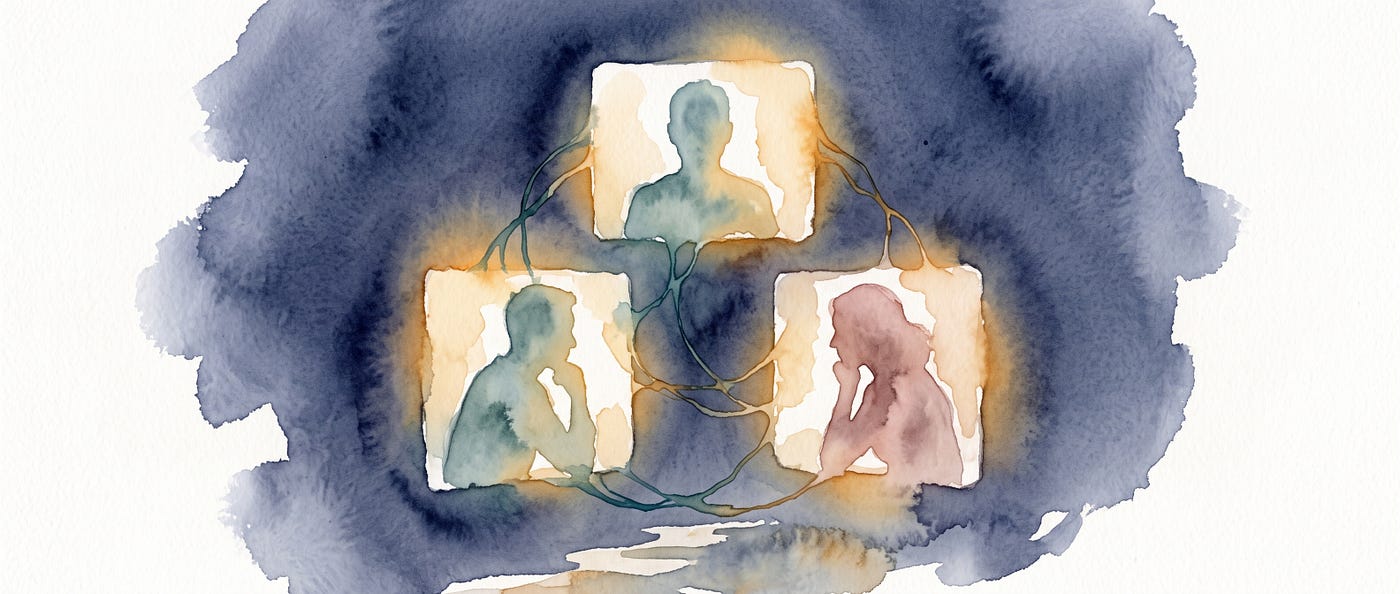
The workshop’s impact compounds with the real work the triads are already doing. After a few weeks, they refine. After a few months, habits form.
I design and deliver several new workshops a year now, and I build this competency-and-spaced-repetition structure into almost everything I do. I’ve stopped apologizing for that, and I’ve stopped selling the pieces apart. An hour of clean content with no follow-up is the program I used to run. I already know how that story ends: a great feedback form, and a sentence about notes nobody goes back to.
The Honest Part
I’ll say the quiet part out loud here, because I’d rather you hear it from me than find it out the hard way. Even with all of this, some triads go quiet by week three. That’s not a flaw in the design. That’s what happens to any commitment once real life gets loud again. What’s different now is that I can see it happening, and there’s a structure built to help a triad restart instead of just disappear.
Here’s what tells me the structure is doing its job anyway. Across the EI and Coaching cohorts, we’ve run this way, somewhere between 80 and 90 percent of triads complete the full 90-day cadence. Not just show up for the workshop. Finish the check-ins, the exercises, the whole arc.
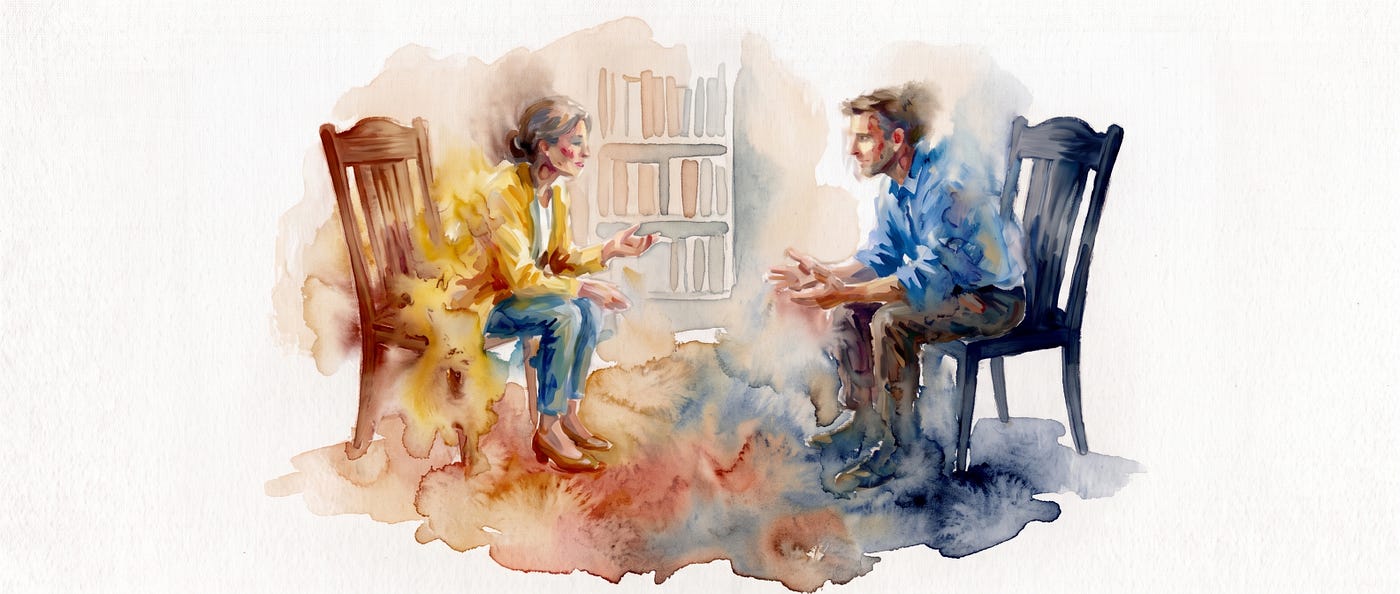
That number is the part I’m proudest of, and it still isn’t the part that convinced me. That happened at a conference, years after one of the coaching workshops, when a woman told me her triad had kept going for eleven months, well past the ninety days we’d asked of them. Eventually all three took jobs at different companies, in different cities. But she still meets, every month, with one of them. These days their calls aren’t about the workshop anymore. He’s the one holding her accountable for a book she’s writing on teams and leadership, checking in on chapters the way he used to check in on meetings she’d promised to run differently.
A ninety-day commitment turned into a working friendship that outlasted three job changes. I didn’t design for that. I only designed for the ninety days to hold long enough for something else to take root. The garden did the rest.
If you’re evaluating a leadership program for your organization, ask one question before anything else: what happens a month after the workshop, once the excitement in the room has worn off and nobody’s watching? If the honest answer is “nothing, we hope it sticks,” you already know what the feedback forms will say. They’ll say 4.8. And four months from now, someone in that room will tell a colleague it was great, and they really should go back and look at their notes.

I’m John Losey. I’ve spent over thirty years designing leadership development that’s supposed to change how people lead, and most of that time figuring out why so much of it doesn’t. This year, IntoWisdom is rolling out a significantly enhanced version of the follow-up platform behind “Clear the Way, and Keep it Clear,” built for deeper reflection and real application, not just reminders to check a box. If you’re responsible for leadership development at your organization and you’re tired of buying staircases, let’s talk about building a cohort program that’s still running in month six. Reach out through IntoWisdom, and let’s design something your people will still use next year, not just remember fondly.
© 2026 The IntoWisdom Group. This article is part of an ongoing series on facilitation and leadership.
(AI was used in this article for research, grammar, and feedback. All content is the work of the author. The author significantly edited any AI contributions. All images are by Gemini and ChatGPT.)
This article first appeared on Medium.