

For those who want to go deeper or need to see support for these ideas, I’ve included a reference list at the end of this article.
Two Meetings, One Leader
Think about two meetings with the same leader.
In the first one, the room is packed. Slide deck is loaded. The leader walks in, gives a sharp overview of the new strategy, talks for forty minutes, and finishes with a quick “any questions?” A couple of clarifying questions come out. Most people stay quiet. The meeting ends on time. On paper, it looks fine.
A month later, that same strategy is stuck. People are confused about what it really means for their work. Some quietly disagree but do not say anything out loud. The leader feels like they have to push harder. The team feels like change is happening to them, not with them. The idea itself might be sound. The way the room was led is not.
Now the second meeting.
Same leader. Same topic. This time, they open with a simple line. Here is the decision we need to make together, and here is what is already fixed. They ask people to jot down what they are seeing on the ground before anyone speaks. They use small groups to surface ideas and worries. They listen for tension instead of talking over it. They close by naming the decision, the why, and what will happen next
Same leader. Same content. The difference is not personality. It is how they choose to run the room.
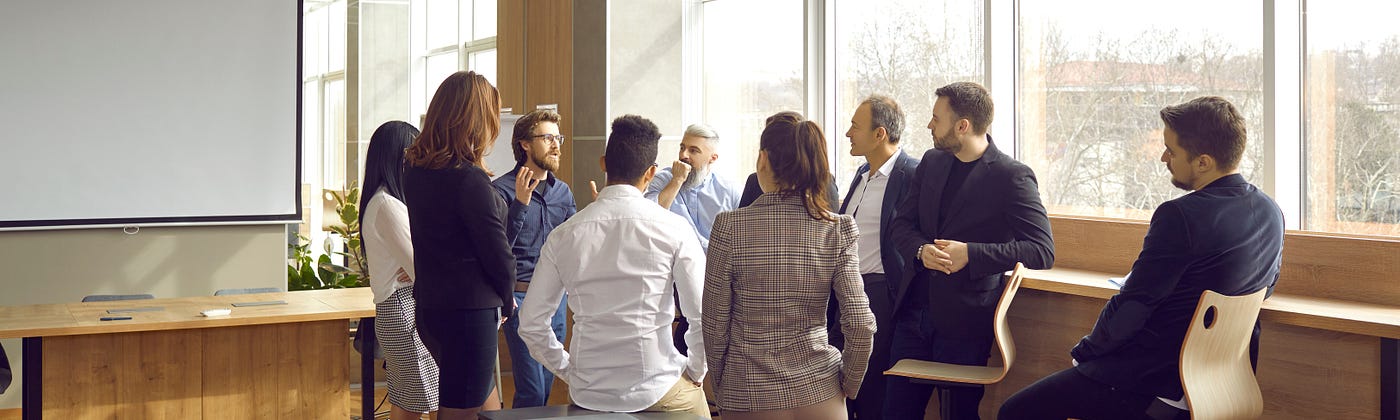
If your work rises and falls on how people think and act together, the way you run the room is not a side detail. It is the job.
Leadership Is How You Run the Room
Most leaders do not get paid to sit alone and think. They get paid to bring people together and move real work. That happens in rooms and on screens. It lives or dies in how you run those spaces.
The work itself is more tangled than it used to be. No single person sees the whole field anymore. Strategy, customers, operations, technology, culture. All of it crosses teams and levels. Leaders who still act like solo experts end up with narrow decisions and slow, painful rollouts. Leaders who can draw out many perspectives and help people think together make better calls and carry people with them.
The expectations have also changed. People want more than polished announcements. They want to understand the purpose. They want a real voice in how change lands on their desk. When leaders only present and defend, trust drains away and resistance goes underground.
On top of that, the health of a team now rests on whether people feel safe to speak up. Research on psychological safety is clear. Teams do better when people can ask questions, admit mistakes, and challenge ideas without fear. Those conditions do not appear by accident. They show up when leaders listen, invite input, and handle disagreement without punishment. In other words, when they facilitate instead of perform.
You can call it running a meeting if you like. The truth is simple. If your work rises and falls on how people think and act together, the way you run the room is not a side detail. It is the job.

What Facilitation Looks Like in Real Life
Picture a high-stakes decision with the senior team. The market is shifting. Budgets are tight. The old move is simple. Lock a few executives in a room. Debate behind closed doors. Announce the answer later and hope people fall in line. A facilitative leader works that room differently. They start by naming the real question and what is already decided. They ask everyone to write down what they see from their part of the business before anyone talks. They use small groups so quieter voices show up. They ask, “What are we missing?” and “Who is not in this room who will feel this?” The research on group decision making and facilitative leadership keeps pointing the same way. Structure plus real participation beats solo heroics for complex calls. Decisions land faster, with fewer reversals later, because people understand them and had a hand in shaping them.
Another moment. A big change announcement. New system, reorg, or strategy. The common pattern is rollout first and listening later. Leaders script a glossy town hall and are surprised when people nod in the room and push back in the hallway later. A facilitative leader starts before the announcement. They hold listening sessions to hear worries and see blind spots. On announcement day, they name what they heard and how it shaped the plan. They invite hard questions and treat resistance as useful information, not disloyalty. Change research keeps telling us that people support what they help shape. Voice and clear dialogue matter more than perfect slogans. When people see how their input shaped the plan, they may still be uneasy, but they are less likely to quietly resist.
Then there is the simple weekly team meeting. It can be a dead zone of status updates. Or it can be a live workshop on how the team actually works together. A facilitative leader does small things differently. They open with one real question. What is getting in our way this week? They notice who talks a lot and who stays silent and make space for both. They do not let side tension sit forever. They name it gently and invite people to sort it out together. Studies on psychological safety show that teams where people can speak up and admit problems early perform better and stay healthier over time. That kind of climate grows in rooms where leaders listen, invite, and hold the conversation well. Problems surface earlier, fixes come faster, and the team spends less time cleaning up avoidable messes.
These are not special workshop tricks. They are everyday moments where a leader quietly chooses to facilitate instead of just present.
So how do you start leading this way on purpose instead of by accident?
Six Small Shifts Any Leader Can Make
You do not need a new job title to lead this way. You need a few small shifts in how you show up in rooms you already own.
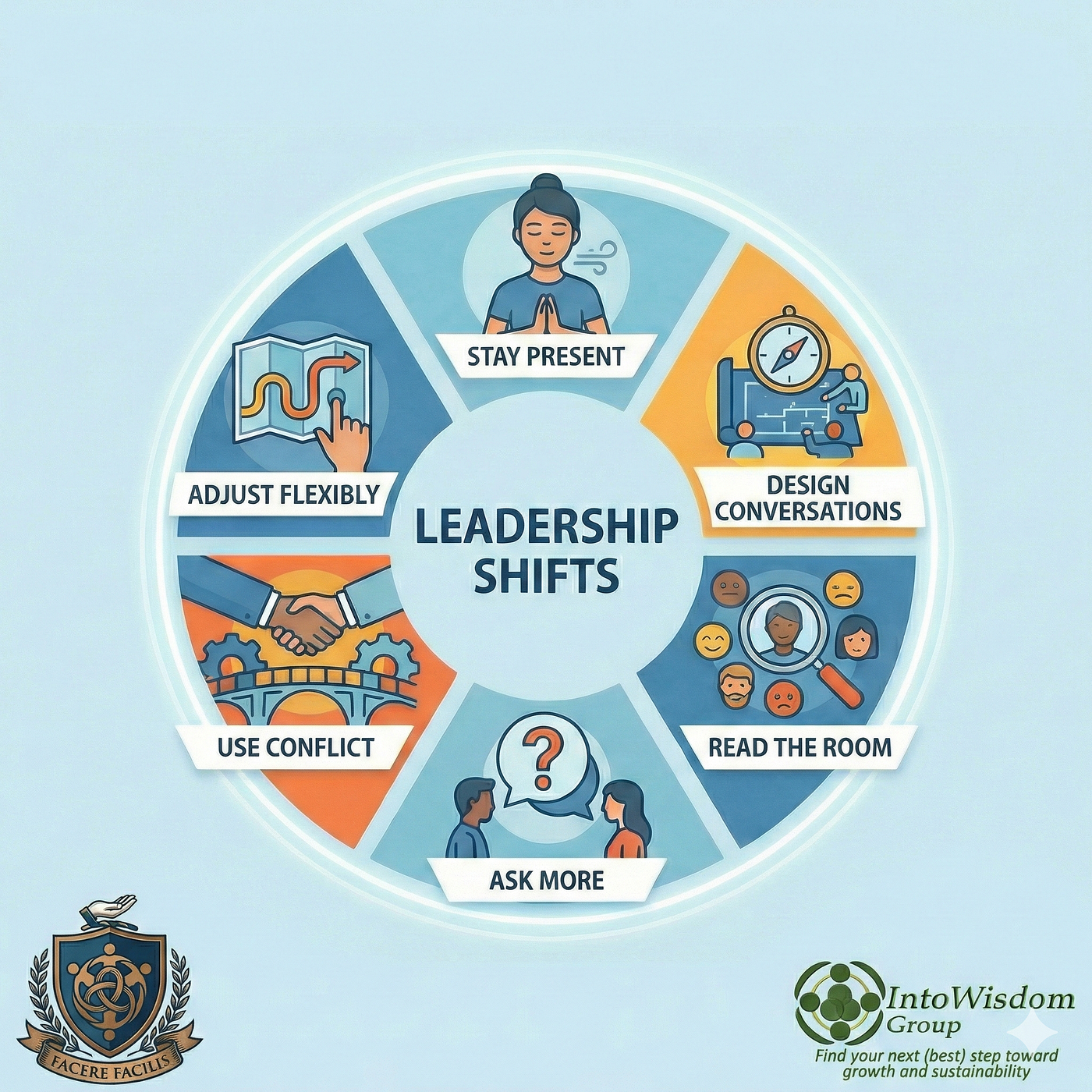
1. From reacting to staying present
Instead of jumping in when the room gets hot, notice what is happening in you first. Here are a few ways to help you slow down. Feel your shoulders. Notice your breath. Give yourself three seconds before you speak. Then talk. Name your own reaction if it helps. I am feeling defensive. Let me slow down. Teams watch leaders in those moments. Calm and fairness from you make it safer for them to speak honestly. Research on psychological safety keeps showing that how leaders handle tension is a major signal for whether people will risk the truth.
2. From we will just talk to let us design this conversation
Most meetings are vague on purpose. People gather and hope something useful happens. A facilitative leader decides the point and the path ahead of time. Consider sending out a simple agenda before the meeting. Why are we together. What needs to be true by the end. How will we get there. Or it can be as simple as start with check in, move to options, end with a clear decision and next steps. Leadership and facilitation writers point out that a little structure goes a long way. Clear purpose and a few simple steps can turn a wandering meeting into a focused working session.
3. From ignoring the room to reading it on purpose
You are already sensing the room. Make that a skill instead of a hunch. This is where staying present (see #1) is helpful. Watch who talks and who never does. Listen for the moment when energy drops. Notice when people stare at the floor after someone speaks. These are not small details. They tell you who feels safe, who is checked out, and where you may be missing the real issue. Guides on group facilitation and team leadership keep coming back to the same basics. Pay attention to participation patterns and body language if you want the truth to show up in the room.
4. From explaining to asking
Leaders are trained to explain. It feels efficient. The problem is you often speak before you have heard what you need to hear. Flip the order. Ask three honest questions before you give your view. What are you seeing that I am not? What worries you most about this option? Who else will this affect? Facilitative leadership work and coaching literature both underline the same move. Real questions not leading ones are what unlock better thinking and deeper commitment.
5. From avoiding conflict to using it
Most rooms carry unspoken tension. The safest move can seem like steering around it. The cost is quiet resentment and side conversations later. Instead, treat disagreement as data. When two people clash over a plan, say “I can hear strong views on this. Let us slow down and hear both sides.” Ask each person to restate the other person’s view before they reply. Writing on modern leadership and facilitation is clear. Teams that can surface and work through conflict, with a leader who holds the space, make stronger decisions and build more trust over time.
6. From clinging to the agenda to adjusting on the fly
A plan is helpful until it is not. Rooms are living systems, not checklists. If people are confused, stuck or flooded, pushing through the agenda just to finish on time does more harm than good. Hold your plan lightly and your purpose tightly. You can say, “We are not ready to decide today. Let us use this time to clarify our options and decide next week.” Work on facilitative and adaptive leadership points to the same idea. Strong leaders are clear on outcomes but flexible on how they get there, especially when new information or emotion shows up in the room.
None of these shifts require more charisma. They ask for more attention and a bit more courage. Step by step they move you from running meetings on autopilot to facilitating on purpose.
One Simple Experiment for Your Next Meeting
You do not need to rebuild your whole leadership style this week. You just need one experiment in one room. Pick one of these and try it in your very next meeting.
- Before people walk in, write one clear purpose line at the top of your notes. By the end of this meeting, we will. Share it in the first minute and come back to it before you end.
- Ask three real questions before you give your opinion. What are you seeing? What is getting in the way? What are we not talking about? Then listen all the way to the end of the answers before you speak.
- Notice who has not spoken. Make space on purpose. I want to hear from someone we have not heard from yet. Then wait. Psychological safety grows every time a leader protects and values a new voice in the room.
Leaders shape culture one conversation at a time. If your work rises and falls on how people think and act together, facilitation is not extra. It is the job.

(All images by Adobe Stock, Gemini, and John Losey)
(AI was used in this article for research, grammar, and feedback. All content is the work of the author. The author has significantly edited any contributions from AI.)
If you want to see some of the work behind these ideas, here are a few places to start.
Support References:
- Community Tool Box. (n.d.). Developing facilitation skills (Chapter 16, Section 2). University of Kansas. https://ctb.ku.edu/en/table-of-contents/leadership/group-facilitation/facilitation-skills/main
- Cufaude, J. (2018, February 1). The art of facilitative leadership: Maximizing others’ contributions. The Systems Thinker. https://thesystemsthinker.com/the-art-of-facilitative-leadership-maximizing-others-contributions/
- Edmondson, A. C. (1999). Psychological safety and learning behavior in work teams. Administrative Science Quarterly, 44(2), 350–383.
- Koppett, K., & Miclot, T. (2024). The facilitation advantage: How to drive impact, build connection, and create more effective meetings. BDI Publishers.
- Losey, J. (2025, March 14). Organizations change, people transition: Why understanding the difference is key to successful change. Medium. https://medium.com/@john_27181/organizations-change-people-transition-why-understanding-the-difference-is-key-to-successful-28added7968c
- McKinsey & Company. (2021, February 10). Psychological safety and the critical role of leadership development. https://www.mckinsey.com/capabilities/people-and-organizational-performance/our-insights/psychological-safety-and-the-critical-role-of-leadership-development
- Mitchell, J. (2024, November 3). Be future ready: 10 essential facilitation skills for leaders. Proteus International. https://proteus-international.com/essential-facilitation-skills-for-leaders/
- Patil, R., Kulkarni, P., Naik, N., Patil, N., & Ghadage, R. (2023). The power of psychological safety: Investigating its impact on team learning, team efficacy, and team productivity. The Open Psychology Journal, 16, e187435012307090. https://openpsychologyjournal.com/VOLUME/16/ELOCATOR/e187435012307090/FULLTEXT/
- Program on Negotiation. (2026, January 12). What is facilitative leadership? Harvard Law School. https://www.pon.harvard.edu/daily/leadership-skills-daily/what-is-facilitative-leadership/
- Association for Talent Development. (2023, October 15). The facilitation advantage: 10 key skills to strengthen any leader. ATD. https://www.td.org/content/atd-blog/the-facilitation-advantage-10-key-skills-to-strengthen-any-leader
- Academy to Innovate HR. (2024, May 2). Facilitative leadership: Definition + examples. AIHR. https://www.aihr.com/hr-glossary/facilitative-leadership/
- Coachology. (2025, October 28). Why are facilitation skills essential for modern leaders? Coachology. https://coachology.com/why-are-facilitation-skills-essential-for-modern-leaders/
- Inclusivv. (2020, December 31). Why facilitation training will be one of the most important skills of 2026. Inclusivv. https://www.inclusivv.co/blog/why-facilitation-training-will-be-one-of-the-most-important-skills-of-2026
This article first appeared on Medium.