
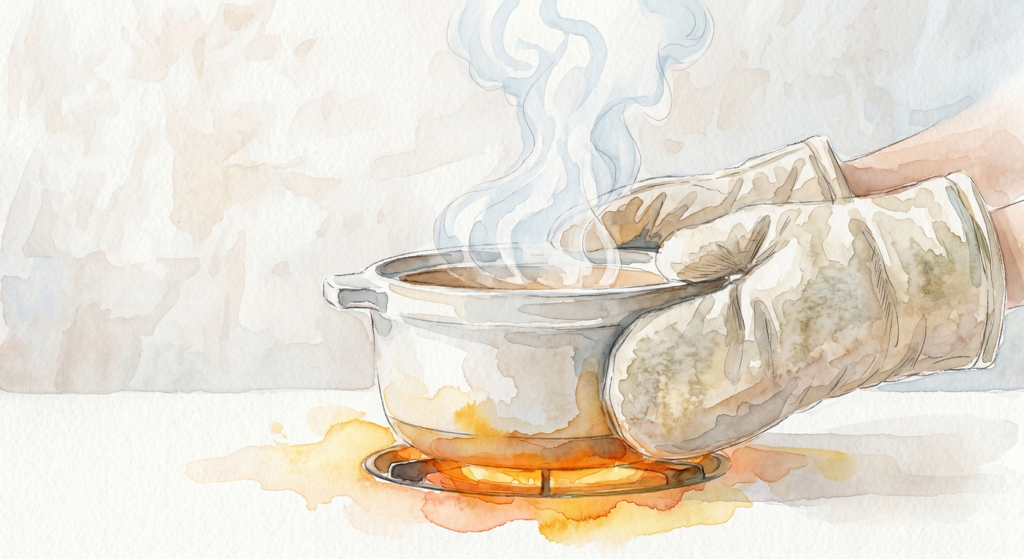
On holding the heat instead of turning off the stove.
Picture a leadership team working on their organization’s purpose statement.
The facilitator has given them a constraint: eight words. Not nine. Not a paragraph. Eight words that capture what this organization is fundamentally for.
The room fills with proposals. Someone offers a word. Someone else challenges it. A third person defends a different word entirely. The conversation heats up. Two leaders are certain they have the right answer. A third disagrees and isn’t backing down. The room is uncomfortable. Several people are wondering whether this was a good idea.
And then — through the friction of that disagreement, through the collision of three different convictions about what this organization stands for — a fourth word surfaces. One nobody brought into the room. One that is more precise, more honest, and truer than any of the words anyone arrived with.
The group goes quiet, the way groups do when something right has just happened.
That word existed before the meeting started. But the only way to find it was through the tension.
This is what facilitated conflict can do. And most leaders and facilitators are so focused on keeping the peace that they never find out.
Conflict Is Data, Not Failure
The most important shift a facilitative leader can make is this: stop treating conflict as evidence that something has gone wrong and start treating it as information about what the group most needs to resolve.
Disagreement in a room is not a sign of dysfunction. It is a sign that real differences exist — in values, in priorities, in how people understand the work — and that those differences have finally surfaced where they can be examined. The group that never disagrees isn’t aligned. It’s either not being honest or not doing work that matters enough to disagree about.
Most facilitated sessions that fail don’t fail because too much conflict arose. They fail because the conflict that was present never got named, never got examined, and never got the chance to produce anything useful. It stayed beneath the surface, shaping the conversation without anyone acknowledging it was there, and the group left with a false consensus that dissolved the moment people walked out the door.
The facilitative leader’s job is not to prevent that conflict from happening. It is to bring it into the light where it can do its work.
Not All Conflict Is the Same
Before you can facilitate conflict well, you must be able to read what kind of conflict you’re actually working with. They don’t all look the same, and they don’t all get handled the same way.
There are three types.
Task conflict is disagreement about what the group is doing — the direction, the decision, the right answer. In a purpose statement session, it sounds like: that word doesn’t capture what we actually do. In a strategic planning session, it sounds like: I don’t think that’s the right priority. Task conflict, when it’s held well, is the most productive force in any facilitated session. It is where the eight-word purpose statement finds its fourth word. It is where a strategic plan stops being a list of good intentions and starts being a genuine set of choices. Amplify it. Give it room. Don’t rush it toward resolution before it has done its work.
Process conflict is disagreement about how the work should be done — who has authority to decide, what the timeline should be, whose input counts. It often masquerades as task conflict and gets misread as a personality problem. A leadership team that keeps arguing about the same strategic question may not actually disagree about the strategy. They may disagree — without having named it — about who gets to make the call. Process conflict needs to be named and addressed directly, because it won’t resolve through content discussion. You can align on the strategy and still leave the room with the same unresolved argument if the underlying process question hasn’t been surfaced.
Relationship conflict is different from both of these and needs to be handled differently. It is the interpersonal friction — the history, the hurt, the status dynamics — that turns a disagreement about words into a contest about who is right and who is respected. Relationship conflict, left unaddressed, poisons everything else in the room. It turns task conflict from a productive force into a proxy war. The facilitative leader’s job is not to amplify relationship conflict but to contain it — to separate the interpersonal friction from the substantive disagreement so the group can work with the latter without being derailed by the former.
Research consistently shows that task conflict, well-managed, improves both decision quality and team learning — while relationship conflict, left unaddressed, is one of the primary predictors of team dysfunction.
The practical guidance is simple and worth remembering: amplify task and process conflict because they carry the room’s most important thinking. Contain relationship conflict because it carries the room’s most important wounds. Both require the facilitative leader to be present, attentive, and willing to name what they’re seeing.
The Container and the Heat
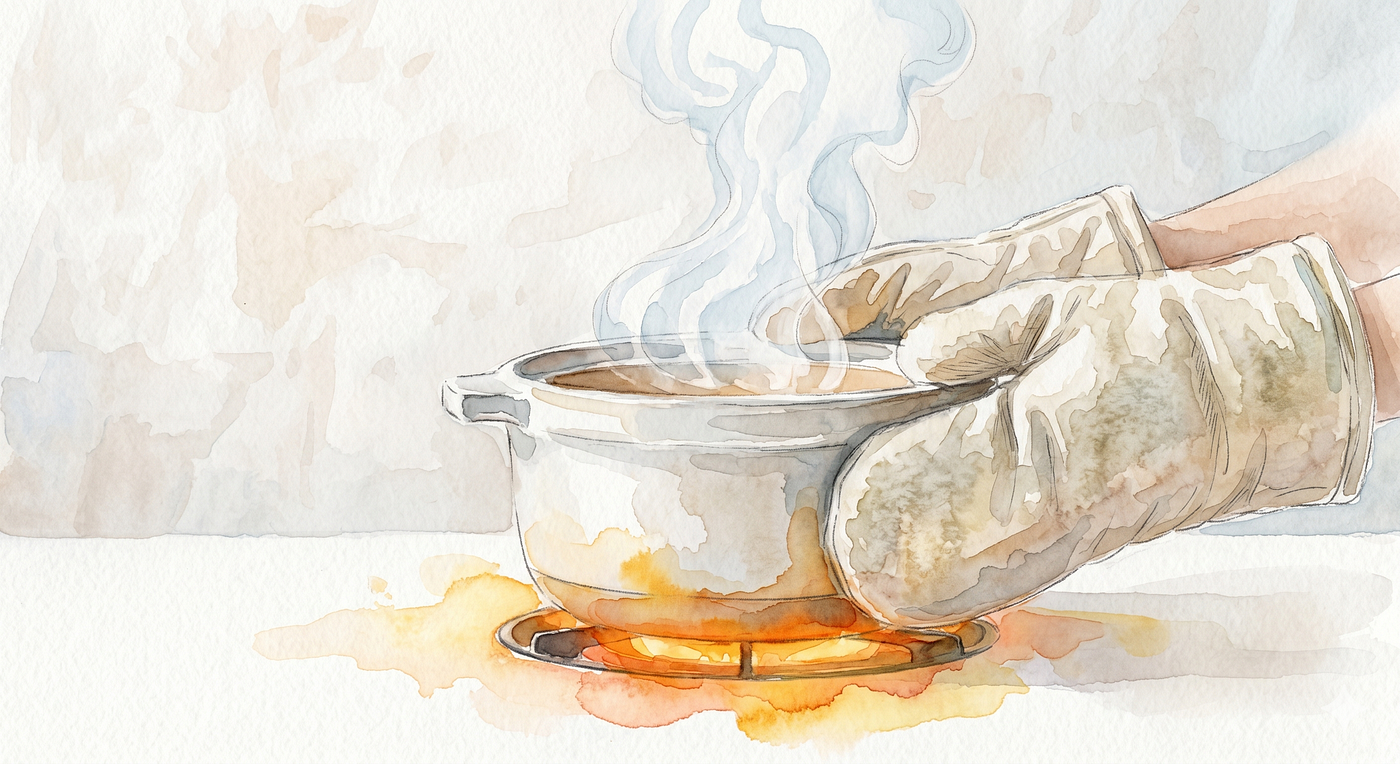
Think of a group working through genuine conflict as a pot of soup that needs to boil.
The heat is necessary. The tension, the friction, the discomfort of real disagreement — that is not the problem. That is the process. The facilitator’s job is not to turn off the stove. It is to provide the oven mitts — the structure, the ground rules, the language, the safety — that allow the group to hold the heat long enough for something valuable to emerge.

A facilitative leader who turns off the stove every time the temperature rises isn’t keeping the room safe. They’re keeping the room stuck.
This requires a fundamental shift in what a facilitator is for. Most people — and most organizations — think of the facilitator as a peacekeeper. Someone who manages the process, keeps things civil, and steers the group away from uncomfortable territory. That model produces comfortable meetings and mediocre outcomes.
The facilitative leader is not a peacekeeper. They are a container builder.
The container is what makes it possible for real conflict to happen safely. It is built from clear agreements about how the group will disagree — challenge ideas, not people. It is built from a facilitative leader’s presence — calm, grounded, neither escalating nor retreating when things get hard. It is built from structures that give people ways to engage with difficult questions without it becoming personal. And it is built from one counterintuitive leadership act: normalizing the discomfort rather than apologizing for it.
The Groan Zone
There is a moment in almost every facilitated session where genuine work is being done that doesn’t feel like progress.
Ideas are colliding. People are frustrated. The clarity that seemed close a few minutes ago has receded. Someone in the room is wondering whether the whole conversation has gone off the rails.
This is the Groan Zone — also called Storming in group process — the uncomfortable passage between the easy answer and the true one. The place where the ideas have collided, and the clarity hasn’t arrived yet.
The facilitative leader who knows the Groan Zone for what it is — not failure, not chaos, but the necessary middle of genuine work — can do something remarkable in that moment. They can name it. They can tell the group: this discomfort is not a sign that we’ve lost our way. It is a sign that we’re close to something worth finding. Stay with it.
That naming changes everything. The group that understands the Groan Zone can tolerate it. The group that doesn’t understand it will retreat to the first answer that feels like agreement, whether or not it’s actually true.

In the purpose statement work, the Groan Zone is the moment when the third proposed word has been rejected, and the right word hasn’t arrived yet. Most rooms want to go back to one of the earlier options. The facilitative leader holds the space. Stays with the tension. Trusts that the word is there.
And then it arrives. From the tension. Through the discomfort. More true than anything the group brought into the room.
Power, Voice, and the Facilitator’s Responsibility
Conflict doesn’t happen in a vacuum. In most organizational rooms, some voices carry more weight than others — by virtue of title, tenure, confidence, or simply the habit of being heard. When that power imbalance is left unaddressed, conflict stops being a generative force and starts being a contest in which the most powerful person wins, and the most important thinking goes unspoken.
This is one of the facilitator’s most important responsibilities and one of the least discussed.
In the purpose statement session, the right word sometimes lives with the quietest person in the room. The one who has been listening carefully while the louder voices argued. The one who, given the right structure and the right invitation, says the thing that changes everything. The facilitator who hasn’t created the conditions for that voice to be heard — who has let the session be shaped by the most confident voices — has left the best thinking on the table.
Acting as a power broker is not about taking sides. It is about ensuring that the conflict the room is working with is the real conflict — the substantive disagreement about ideas, values, and direction — rather than a performance of power in which the outcome was determined by hierarchy before the conversation began.
Interrupt the dominator. Invite the quiet voice. Protect the person who takes the risk of saying the uncomfortable thing. These are not facilitation techniques. They are acts of leadership.

The Facilitative Leader’s Paradox
The word facilitation comes from the Latin facere facilis — to make easy. It is the root of this work and contains a paradox that every facilitative leader must eventually make peace with.
Facilitating conflict does not mean making it painless. It means reducing the friction that isn’t useful — the fear, the ego, the confusion, the power games — while preserving the friction that is. The discomfort of genuine disagreement, held safely inside a strong container, is not an obstacle to good work. It is often the mechanism by which good work becomes possible.
The facilitative leader who has genuinely internalized this paradox shows up differently in a room where conflict is present. They are not trying to manage the conflict away. They are trying to hold it well enough that it can do what it came to do — surface what is real, clarify what matters, and produce the thinking that the group couldn’t have reached any other way.
They are providing oven mitts. Not turning off the stove.
What Facilitated Conflict Can Produce
I have watched task conflict transform a strategic plan from a list of reasonable priorities into a set of genuine commitments — because the disagreement forced the leadership team to be honest about what they valued rather than what sounded good on paper.
I have watched values work produce a word nobody brought into the room — a word that turned out to be more true to the organization’s identity than anything on the original list — because the tension between three competing proposals created the conditions for something more precise to emerge.
I have watched a team work through a conflict they had been avoiding for two years and come out the other side with a level of trust they couldn’t have built any other way — because the facilitative leader held the container strong enough for the real thing to be said.
Three different rooms. Three different kinds of work. The same underlying truth.
None of this happened because the conflict was suppressed or managed away. It happened because someone in the room understood that the tension was the resource — and knew how to hold it long enough for the group to find out what it was really for.
That is what facilitative leaders do. Not just in formal facilitation sessions, but in every meeting, every difficult conversation, every moment when real disagreement surfaces and the room is waiting to find out whether someone is going to turn off the stove or hand out the oven mitts.
What to Take Into Your Next Room
The next time conflict surfaces in a room you’re leading or facilitating, resist the first impulse — which is almost always to smooth it over, redirect the conversation, or rush to a resolution that makes everyone comfortable again.
Instead, ask yourself three questions.
What kind of conflict is this? Task and process conflict carried well is the room’s most valuable resource. Relationship conflict needs to be contained and transformed so the substantive work can continue.
Is this the Groan Zone? If the group is uncomfortable and the easy answer hasn’t satisfied anyone, you may be exactly where you need to be. Name it. Stay with it.
Whose voice hasn’t been heard? The right answer is sometimes in the room but not yet in the conversation. The facilitative leader’s job is to make sure the thinking that matters doesn’t stay silent because the room’s power dynamics made it feel too risky to speak.
Conflict facilitated well doesn’t just produce better decisions. It produces teams that trust each other more than they did before — because they’ve done the hard thing together and found out that the room could hold it.
The word nobody brought into the room is waiting in the tension.
Your job is to hold the space long enough for it to arrive.
John Losey is an organizational development consultant, facilitator trainer, and founder of the Facilitators’ Guild and IntoWisdom Group. He works with leaders and organizations to build the conditions where people and teams can do their best work.
© 2026 The IntoWisdom Group. This article is part of an ongoing series on facilitation and leadership.

(Images by Gemini AI and Claude AI)
(AI was used in this article for research, grammar, and feedback. All content is the work of the author. The author has significantly edited any contributions from AI.)
This article first appeared on Medium.