

Not a subscriber? Read it HERE for free (and consider subscribing and following)
I’ve had a fun, adventurous life. Football, wrestling, rock climbing, scuba diving, and a fair number of questionable decisions along the way. The bill for that fun came due in the form of two rebuilt knees, a shoulder that complains when it’s cold, and a back that stops negotiating after about forty-five minutes in a chair.
So, in long meetings, I get up. I walk to the back of the room, lean against the wall, and cross my arms. It’s the only way I can stay in my present without staying in a seat.
More than one leader has pulled me aside at a break to ask why I checked out.
I didn’t. My knees did.
Nobody asked me that question in the moment. They just decided without checking.
Once someone decides what your behavior means, they stop being curious about what it actually means.
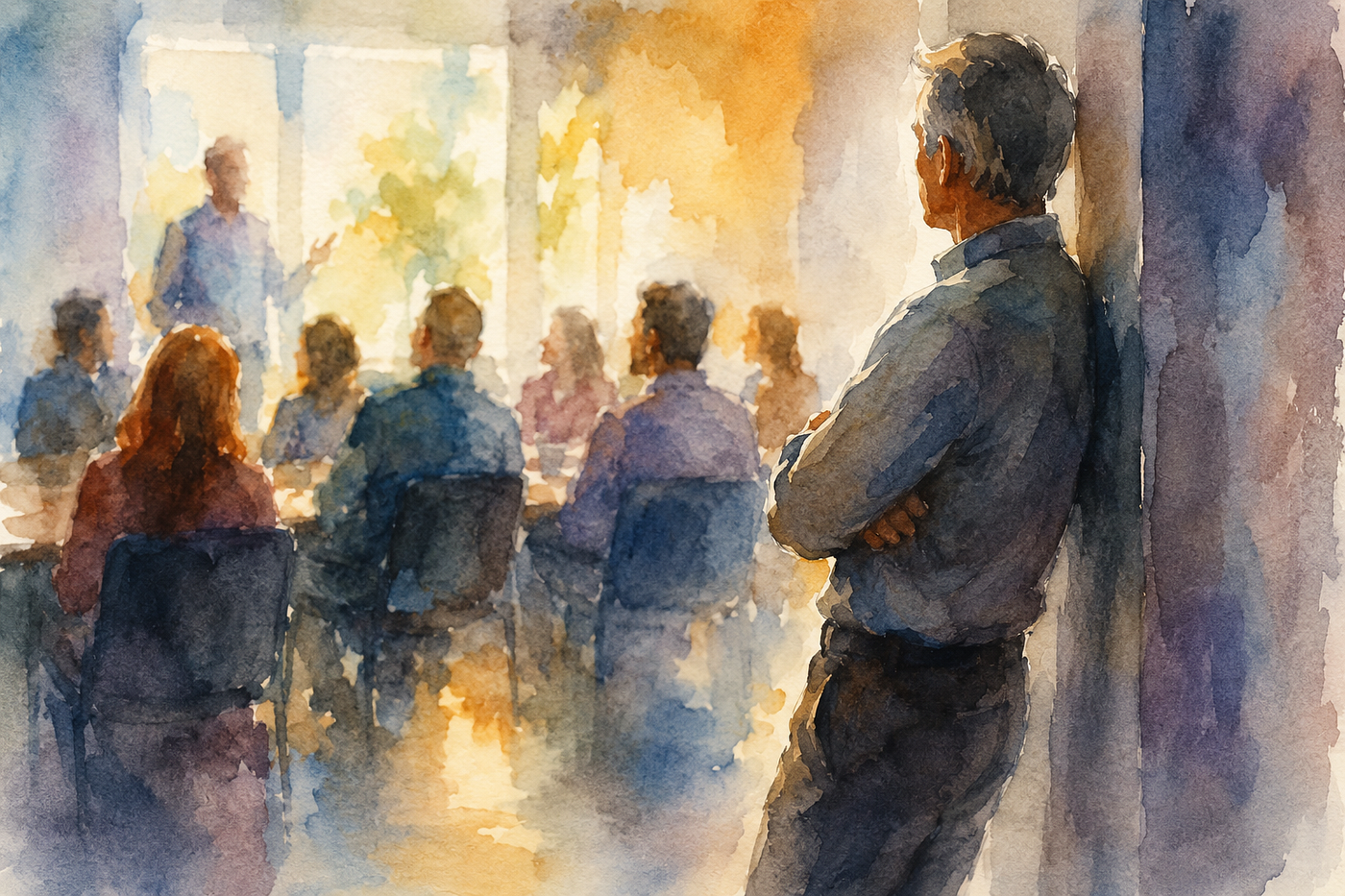
That’s the difference between observation and interpretation. An observation is what you saw or heard. Nothing more. “You crossed your arms.” “You looked at the floor.” “You didn’t say anything for the rest of the meeting.” An interpretation is the meaning you attach to what you saw, usually before you have enough information to attach anything at all. “You’re disengaged.” “You’re upset with me.” “You don’t respect this team.”
Observation gives the other person a mirror. Interpretation hands them a verdict. One invites them to explain. The other invites them to defend.
I saw the real stakes of that difference in an advanced leadership training class I was facilitating. A participant fell asleep during a session led by a Senior Leader. The Senior Leader wanted him removed from the program on the spot.
Instead of acting in the moment, I waited for the next break and pulled the participant aside. I told him what I’d noticed, nothing more. “I noticed you nodded off during that last session. What’s going on?”
He told me he’d just started a new medication for a serious condition and hadn’t realized it would hit him like that. He needed to eat something beforehand so it wouldn’t happen again.
What looked like disrespect, laziness, or a lack of seriousness was a man managing a health issue he hadn’t fully figured out yet.
I found the Senior Leader afterward and shared what I’d learned. He was genuinely relieved to hear the participant was all right and grateful we’d taken the time to find out rather than act on a guess. Once that relief settled, a second realization followed close behind. He saw how differently that morning could have gone. A participant removed from a leadership program over an undisclosed medical condition isn’t just a bad outcome for the person. It’s a serious liability exposure for the organization. Caring about the person and protecting the organization turned out to be the same decision, not competing ones.

This is the part leaders tend to miss. The danger of misjudging someone isn’t only what it costs them. It’s what it costs you.
Every fast verdict you get wrong is a small withdrawal from an account of trust you don’t get to see the balance of, until it’s empty.
The fix isn’t complicated. It’s a pause and a question. Notice the behavior. Name it plainly, without a verdict attached. Ask what’s going on, and let the other person tell you.
Most of us think fast judgment is a sign of good leadership. It isn’t. It’s a shortcut, and shortcuts have a cost. The leaders worth following are the ones who can hold their conclusions a moment longer than everyone else, long enough to find out they might be wrong.
I’ve been misjudged plenty of times. I’ve also caught myself before misjudging someone else. The difference between those two outcomes was never intelligence. It was patience.
That’s a habit anyone can build. It just takes a willingness to ask before you decide.
John Losey is a leadership coach, facilitator, and trainer with the IntoWisdom Group. He works with leaders and teams on the skills that make the work worth doing. He is also a founding member of the Facilitators’ Guild
(All images by Gemini and Chat GPT)
(AI was used in this article for research, grammar, and feedback. All content is the work of the author. The author has significantly edited any contributions from AI.)
This article first appeared on Medium.